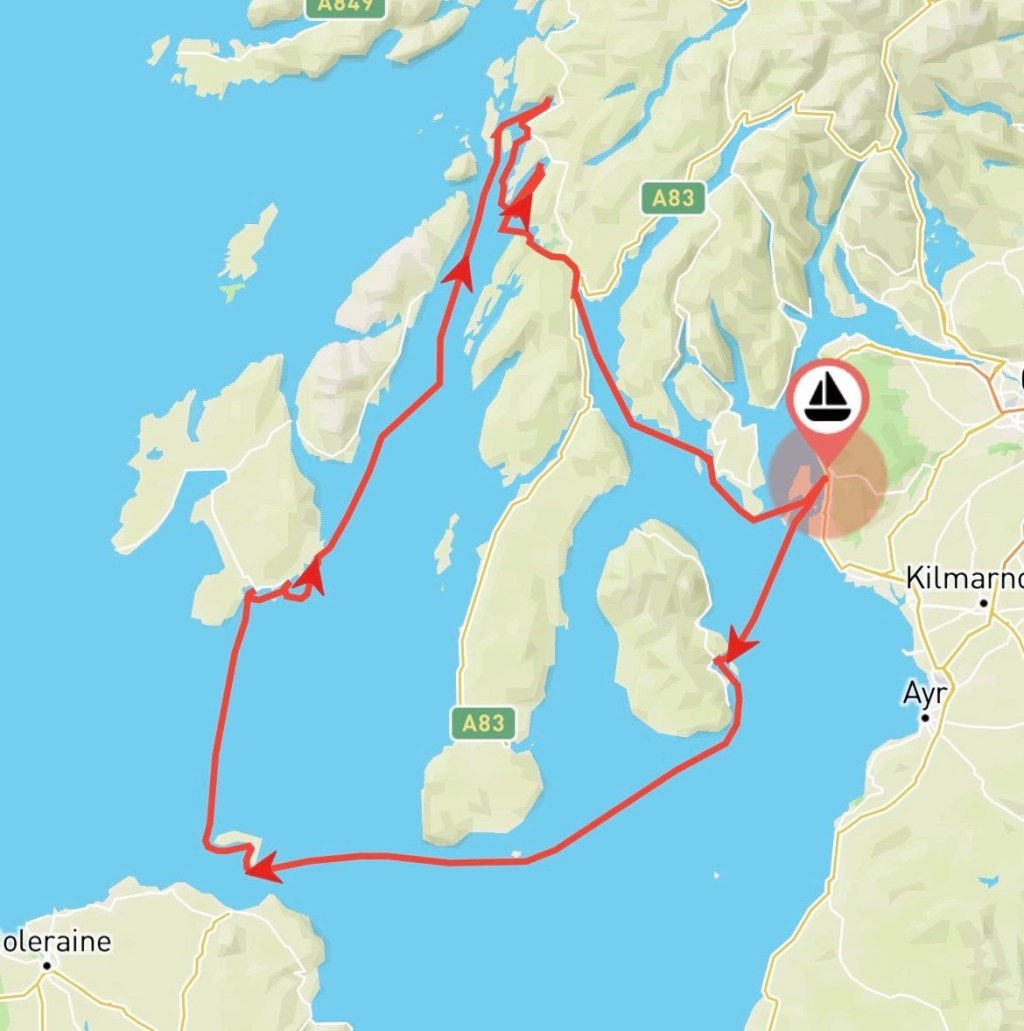
Following our fabulous cruise in late May / early June, when we had 16 days of sunshine and settled weather, our attempted weekend cruises around the Clyde cruising area over July and August were largely frustrated by a run of generally poor weather. As the end of August approached, we decided to pencil in a week, subject to weather, to take in the English Bank Holiday weekend.
On the Friday, the forecast looked encouraging, at least to make a start, with the option of retreating at the end of the holiday weekend if the forecast turned too poor. And so, on finishing work, the offices on the saloon and cockpit tables were tidied away, shore power disconnected, and we cast off. We do love this ‘instant on holiday’ thing – no airport or travel hassles – indeed, no journey at all, as we are already on the boat!
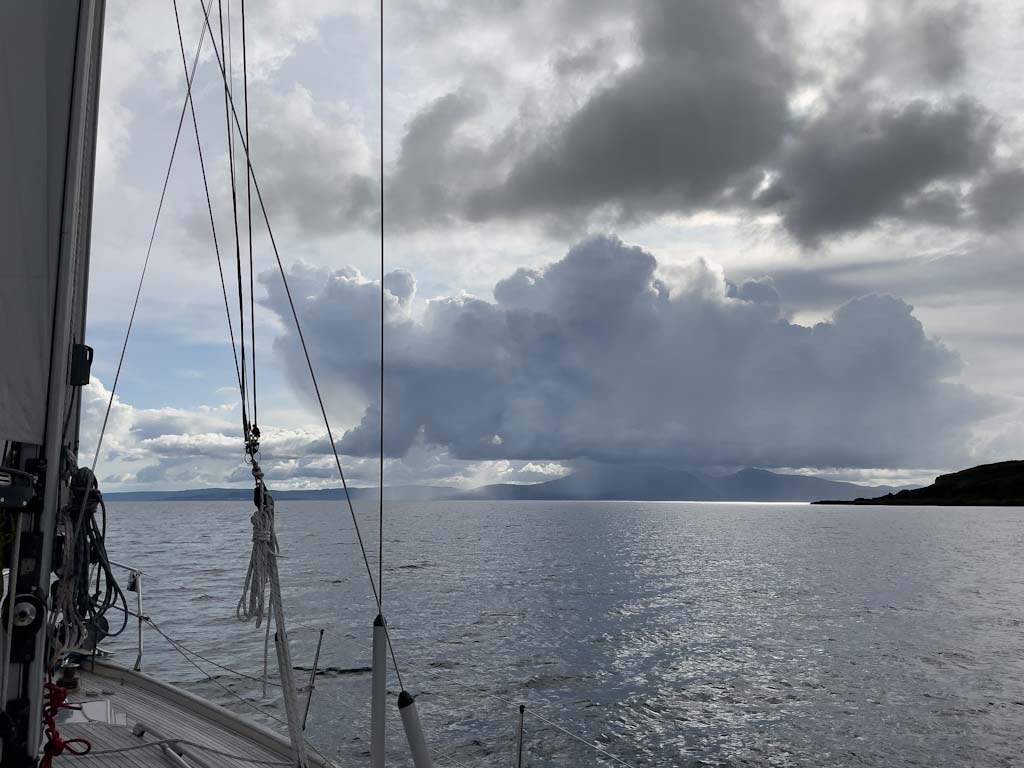
After a good passage mainly in sunshine and mostly with enough wind for a decent sail, mostly missing the large showers that crossed us ahead and astern, we arrived in Lamlash Bay, Arran, and settled at anchor with a few other latecomers, all visitor moorings being occupied.
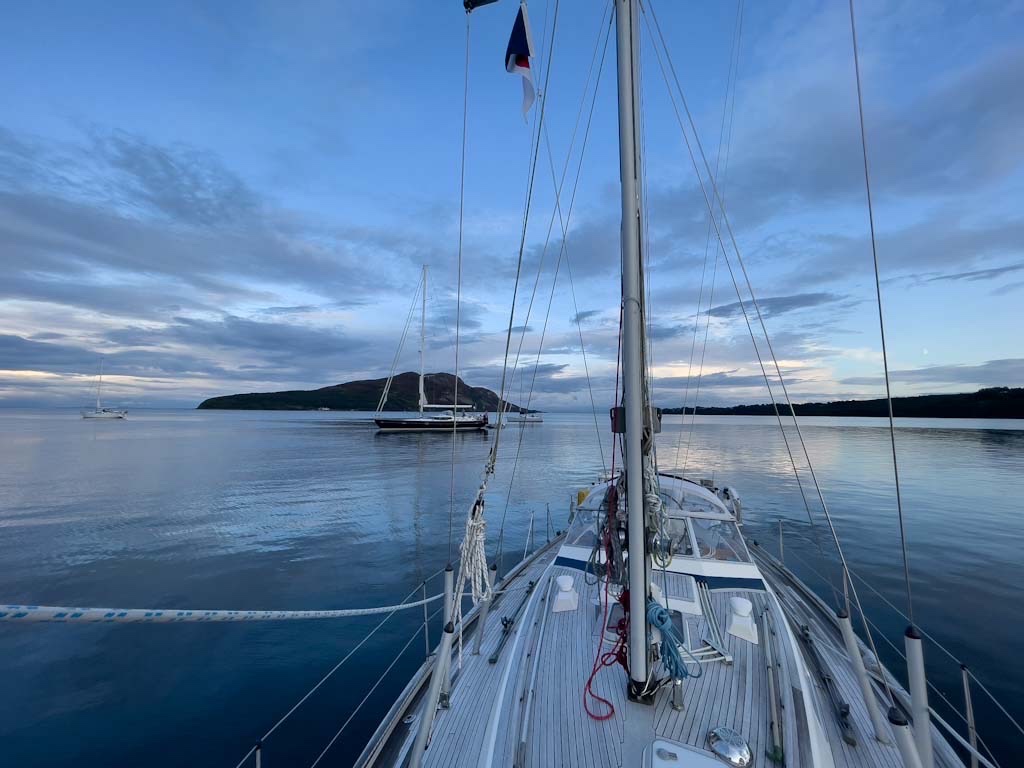
Our considered cruise options from here, in order of length of passage, were to head towards Glenarm, on the East coast of Antrim, and then head north around the coast; or to go around the Mull of Kintyre, to Rathlin Island, some 3 miles to the North of Ballycastle, Antrim – almost West from the Mull; or to proceed onwards to Port Ellen, Islay (to the North West) or to Gigha, more or less due North from the Mull. The forecast in the morning was for a light to moderate Northerly, filling in further from the North West during the day, and backing to West and increasing by the next morning. This made an easy decision, to head to Rathlin, and the following day, it would be more or less North to Port Ellen.
The currents off the Mull of Kintyre are quite vigorous, and worth paying attention to for a comfortable passage! We had until about 13:00 to get past the Mull with a favourable tide; and consequently we departed Lamlash at 06:45, in sunny calm conditions, and were duly South abeam of the Mull lighthouse at noon; this left 13 nm to reach the south headland at Rathlin, where we would arrive around an hour after slack water.
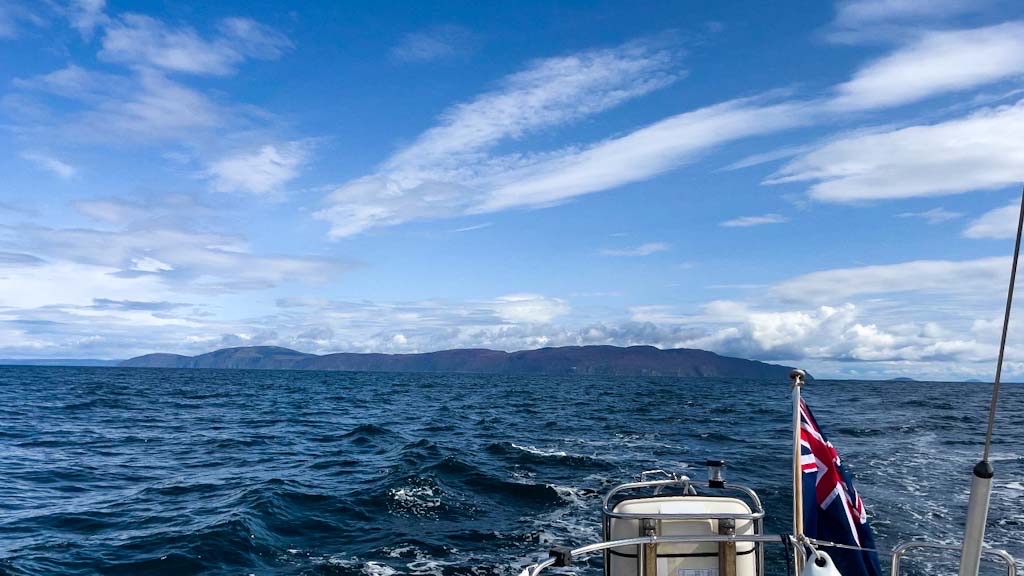
We were surprised to find about 4.5knts of current already against us at the Rathlin headland – and this was at neaps! We pushed slowly through, and arrived through the harbour entrance, to be directed to raft alongside another yacht; the harbour was unusually full, including two large passenger RIBS, as 500 runners were on the island for an event being run that afternoon! Stuart the harbour master was super helpful, as was Brian and his crew on the yacht we rafted alongside; whilst we could have moved to a new berth in the early evening once the RIBS had departed, all agreed it was fine to stay as we were.
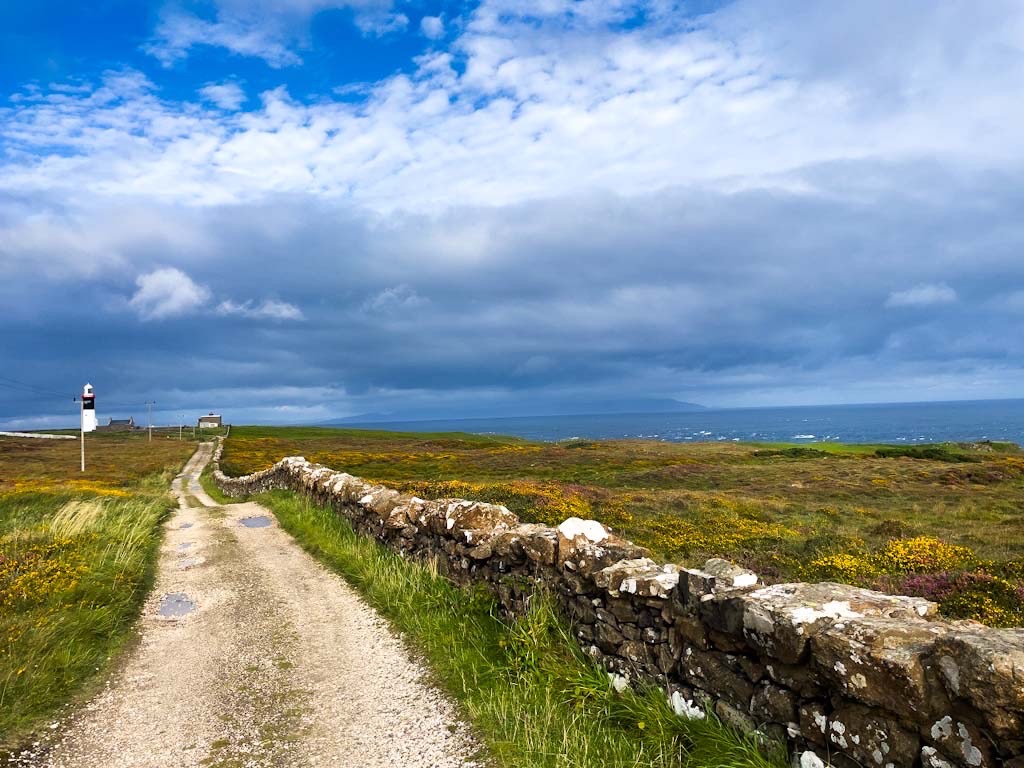
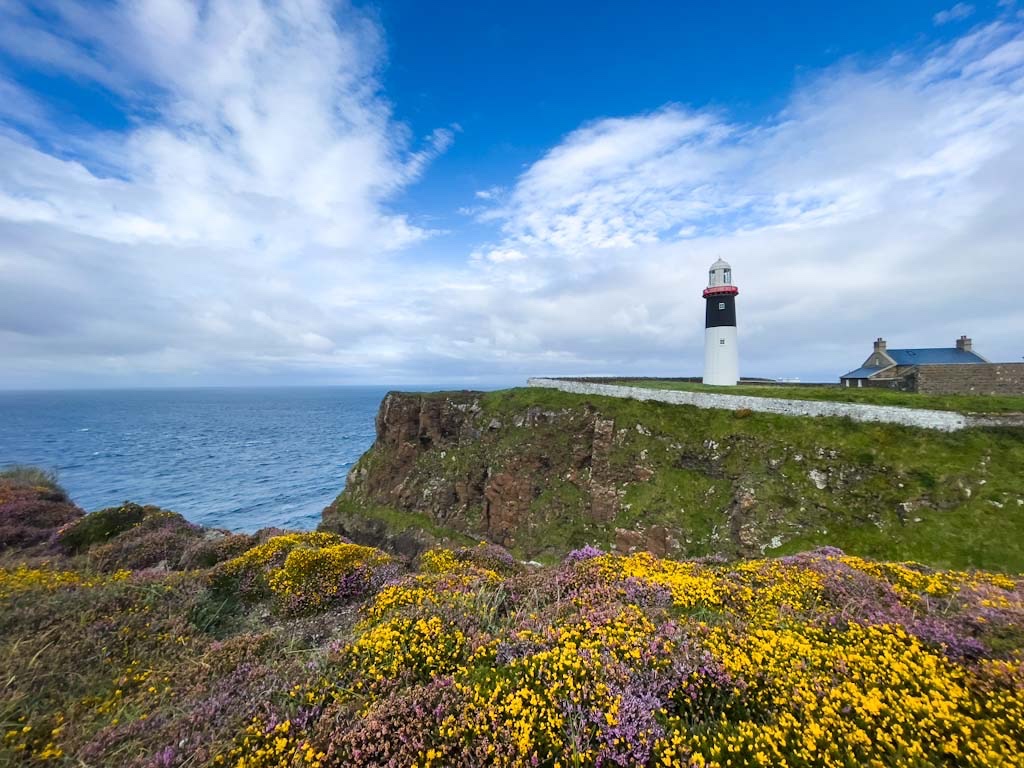
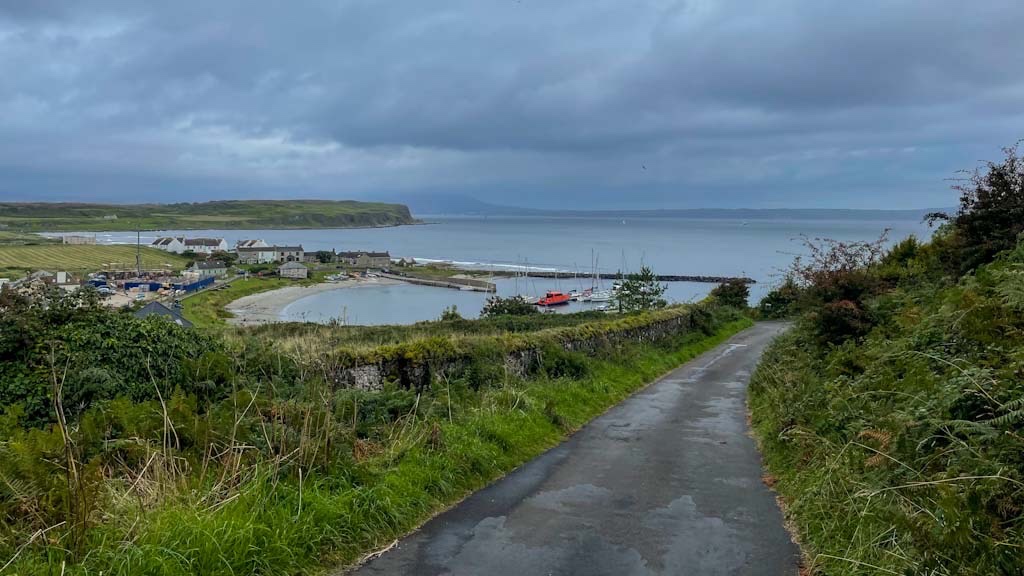
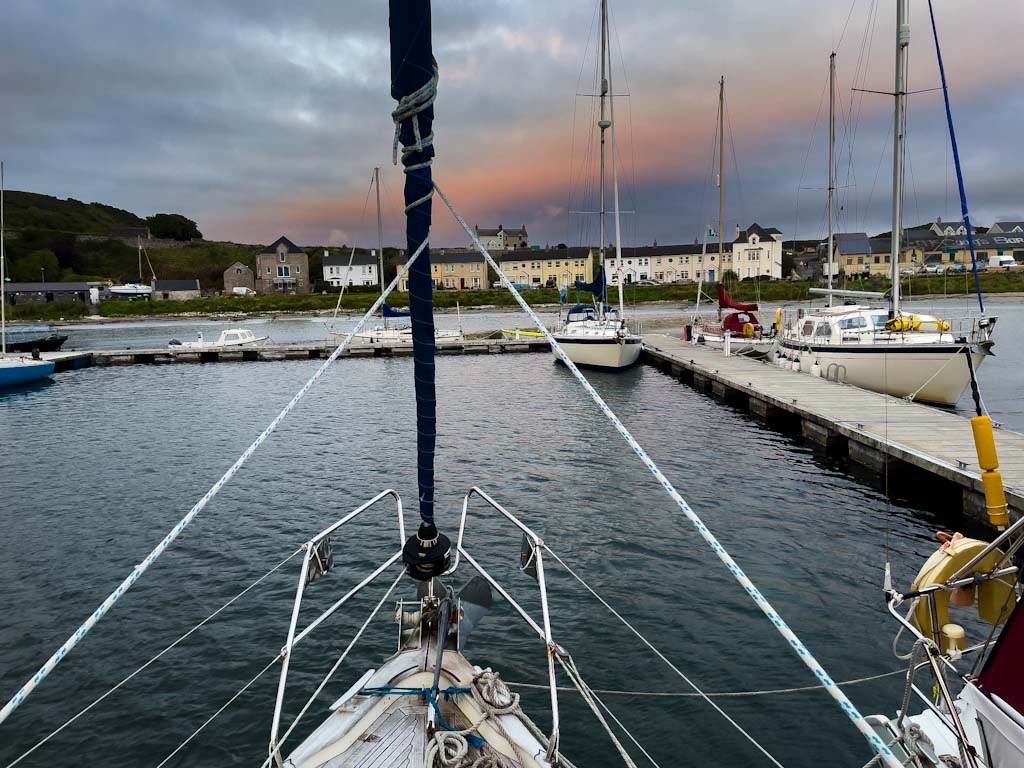
We had a quick visit to the island community store, for some essential supplies we had omitted to bring, and enjoyed a walk to the lighthouse on the north east corner of the island. The Manor House restaurant looked lovely, but was unfortunately booked out on this occasion. Next time, we will walk to the nature reserve at the west end of the island, with its ‘upside down’ lighthouse; but on this occasion, it was time to press onwards in the morning.
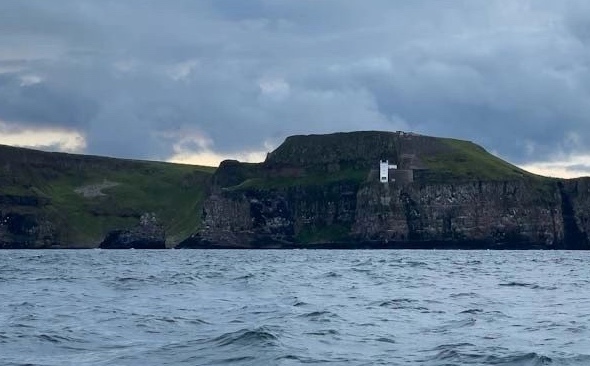
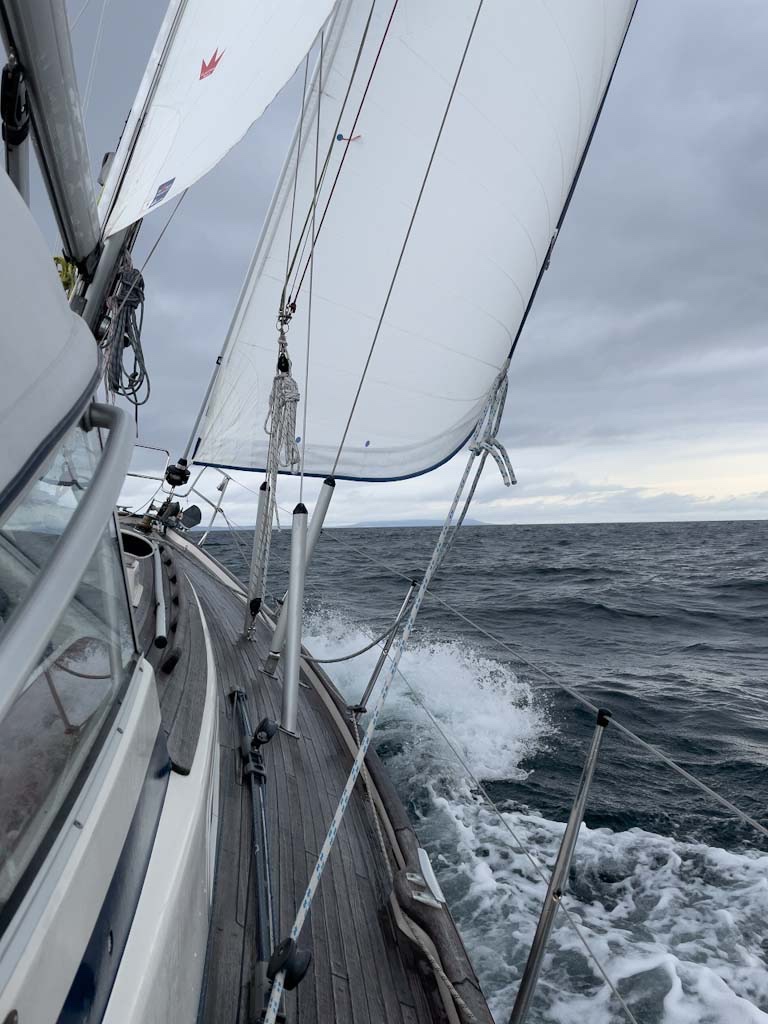
On reaching the west corner of the island, with the first of the tide flowing west, and with a light to moderate west wind, the over falls were already very lumpy, making an uncomfortable passage for an hour or so; initially, the westerly winds were a bit too light to make progress under sail, but soon the winds filled in and we had a cracking sail, on a beam reach, until we reached the wind shadow of the corner of Islay called ‘Oa’. The Calmac ferry Finlaggan was approaching Port Ellen at the same time as us, initially nearly on a collision course with us according to the AIS; but of course, they were doing more than twice our speed, and were safely alongside and unloading well before we were entering the harbour area past the exposed reefs.
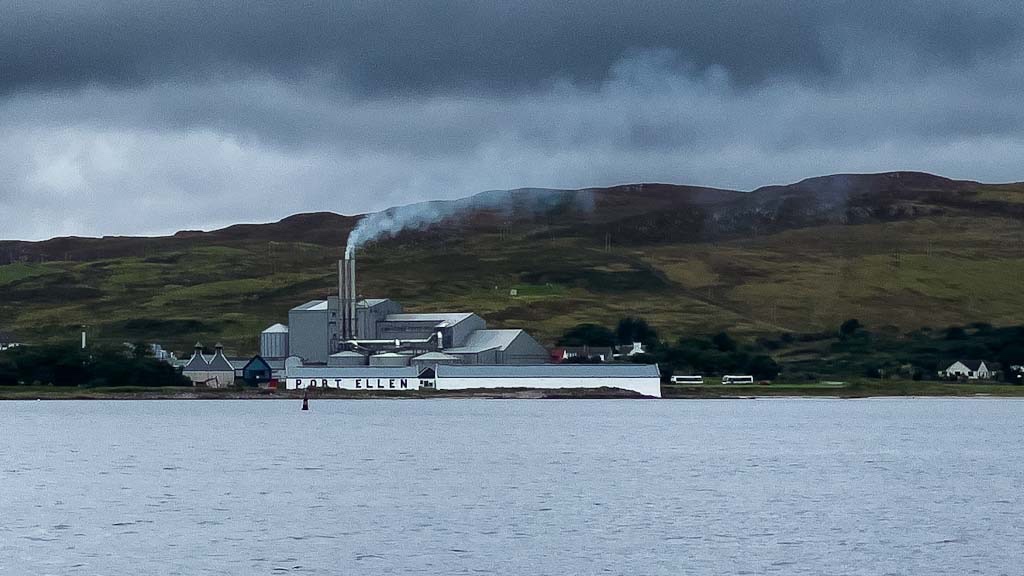
The marina at Port Ellen has plenty of capacity for visitors, and we were assisted alongside by the crew of two adjacent visiting yachts.
The volunteer marina manager soon arrived to welcome us, and to brief us on where to find the marina facilities and how to pay (a very reasonable £27 including power).
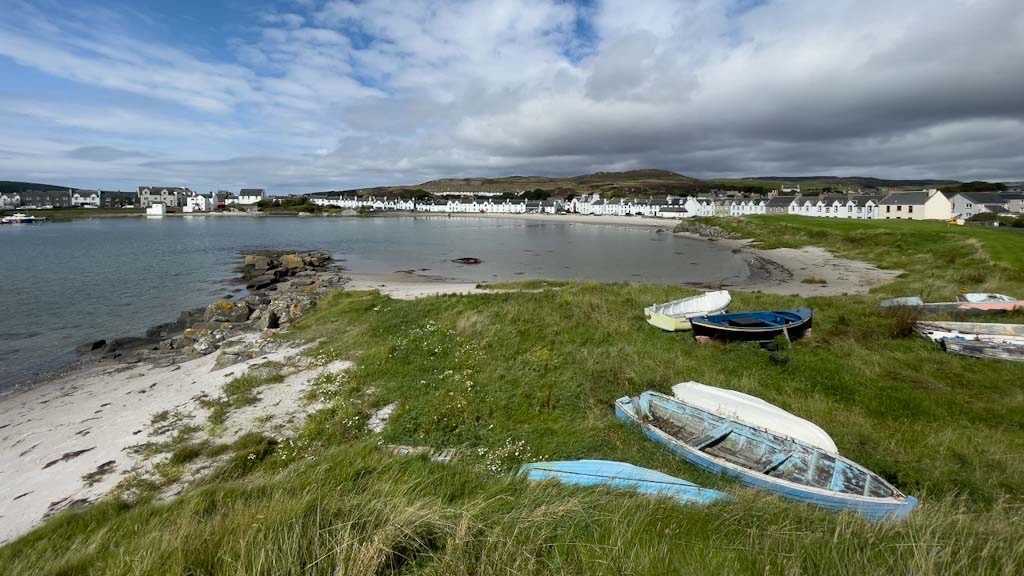
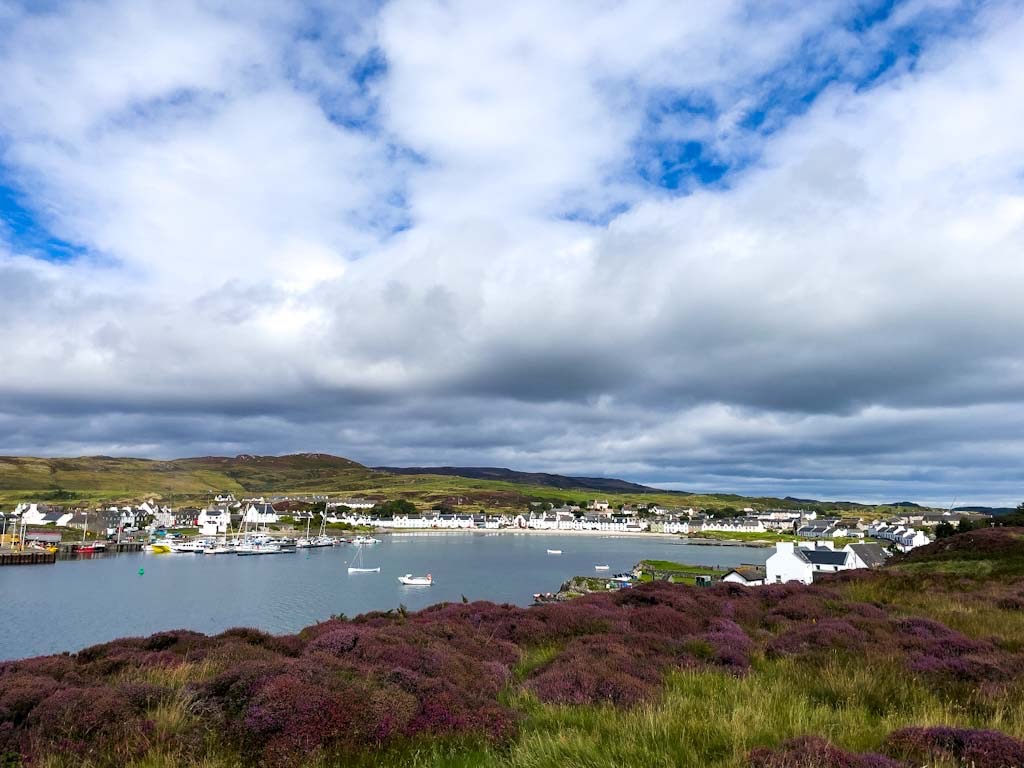
We enjoyed a walk around the local area, including the former Port Ellen distillery buildings and adjacent beach; the Port Ellen Hotel was fully booked for this Sunday evening, so we ate on board again.
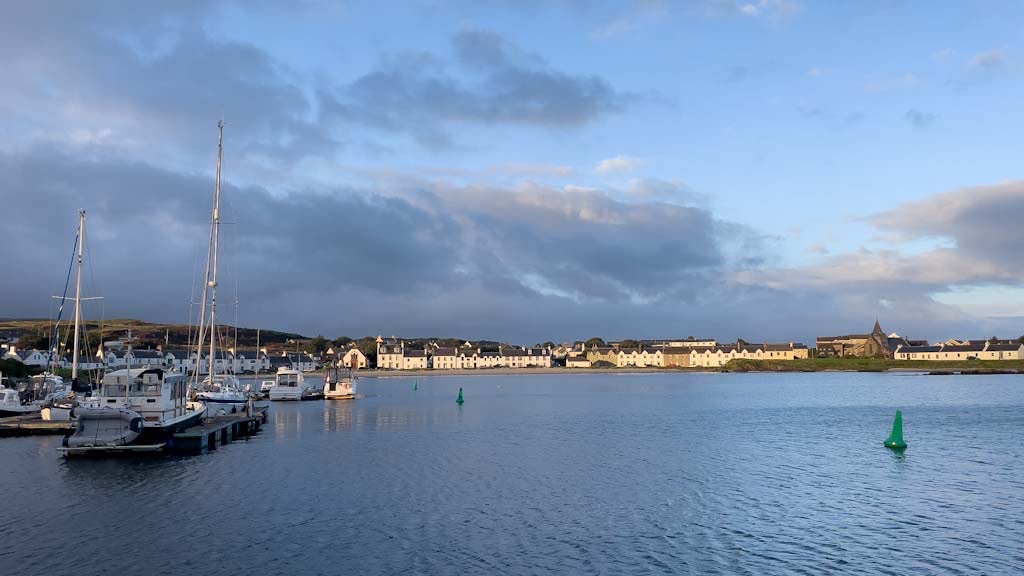
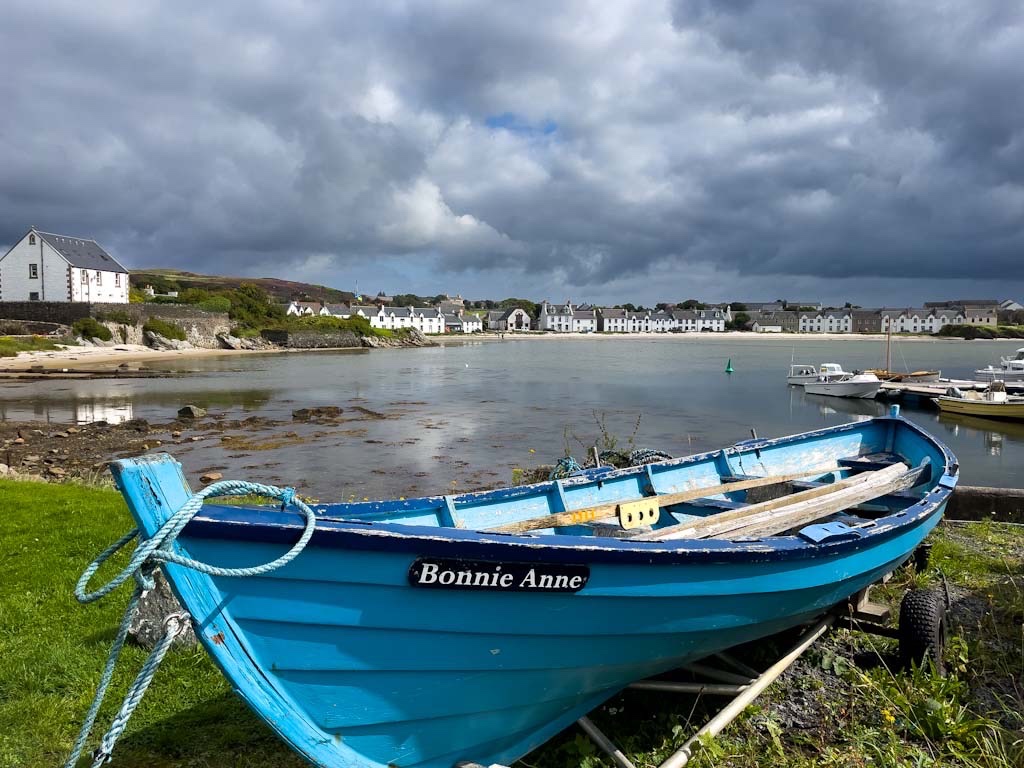
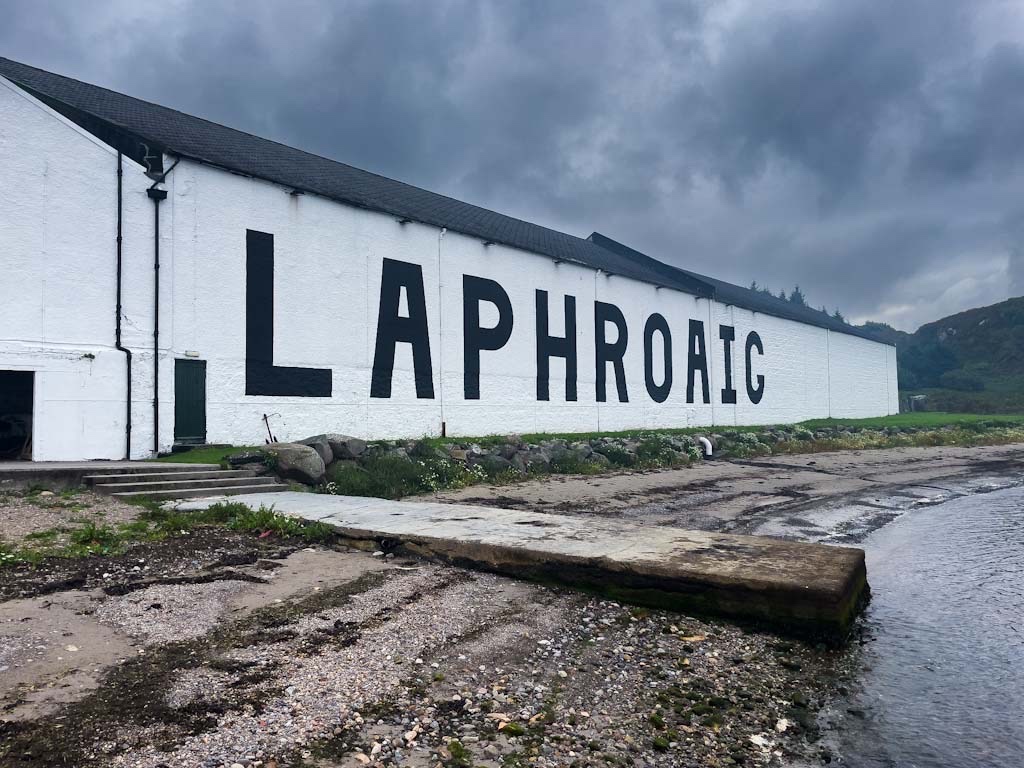
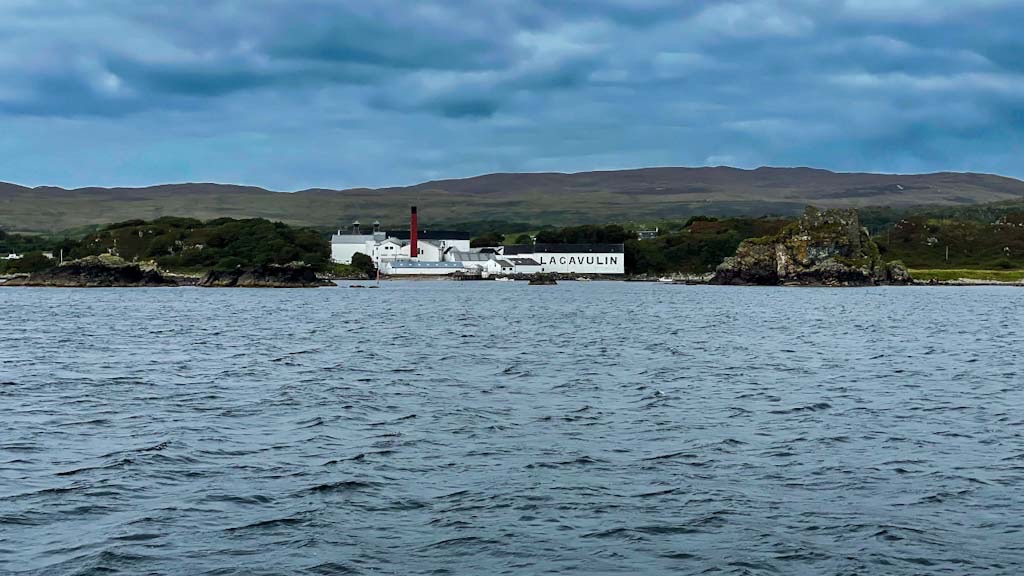
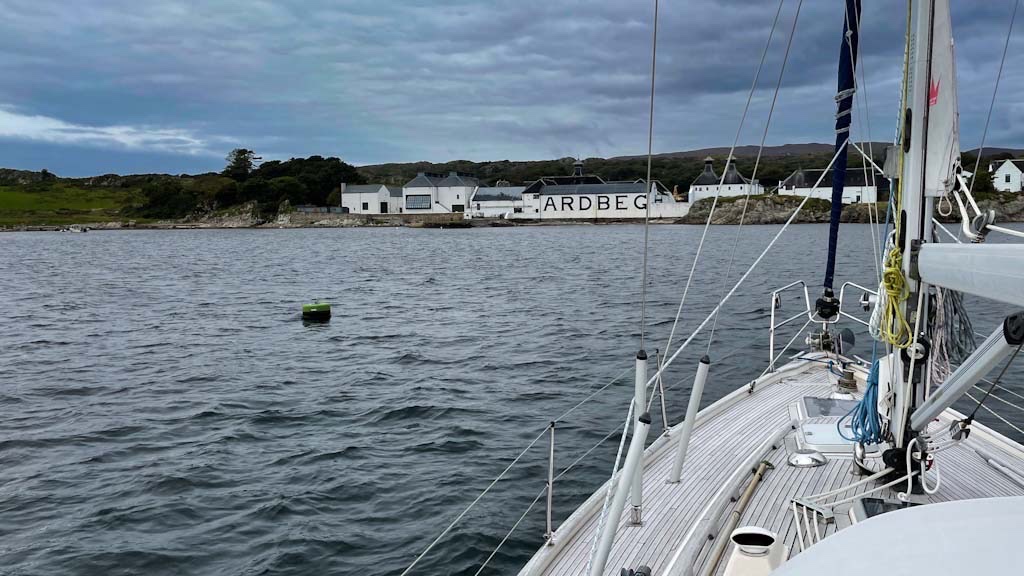
After a rather noisy night – a chilled trailer for shellfish being on the quay with its engine running all night – we enjoyed a walk along the footpath to Lagavulin and Laphroag distilleries, passing the new distillery under construction just outside Port Ellen, before departing to explore the distillery bays by sea, and finishing at the stunning Ardmore Islands; the inshore route from Port Ellen was very interesting, picking a route between various reefs & islets, the detailed charts from Antares coming once more to the fore.
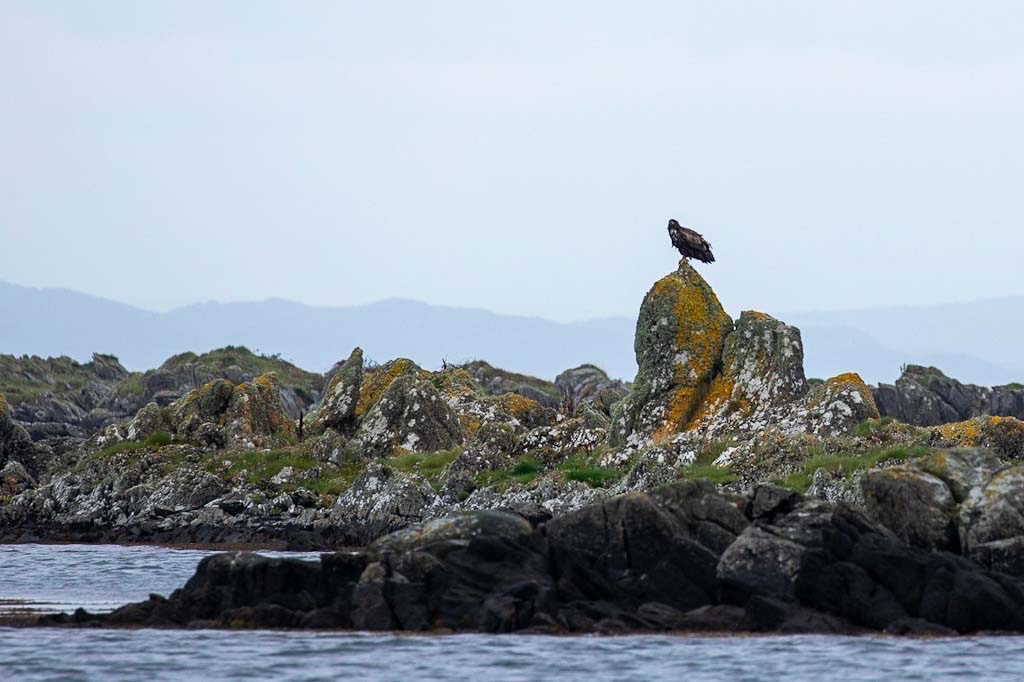
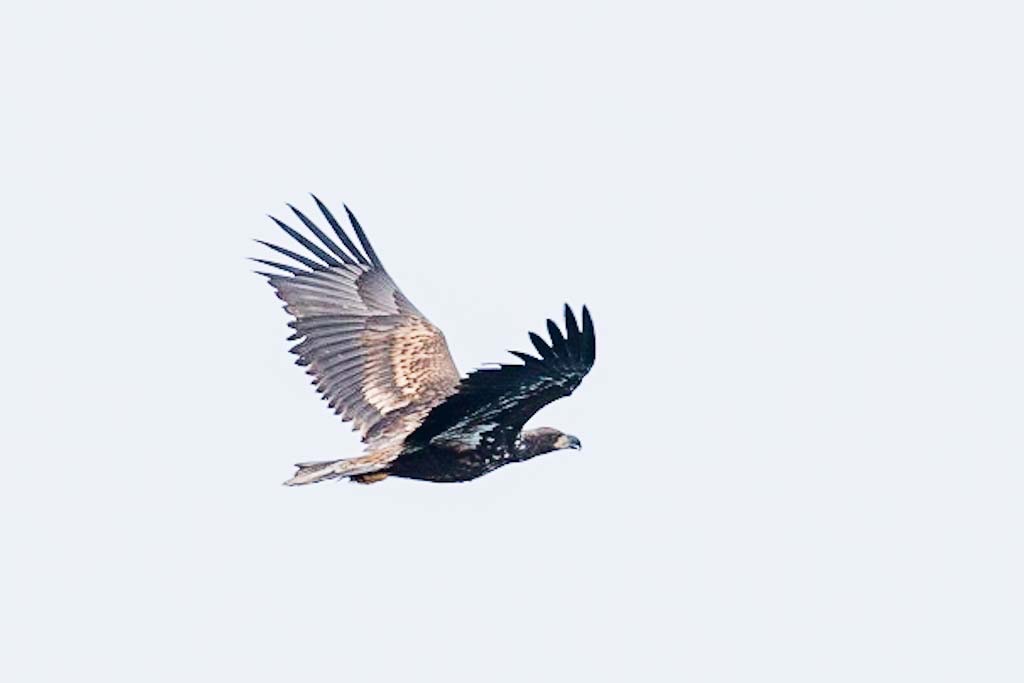
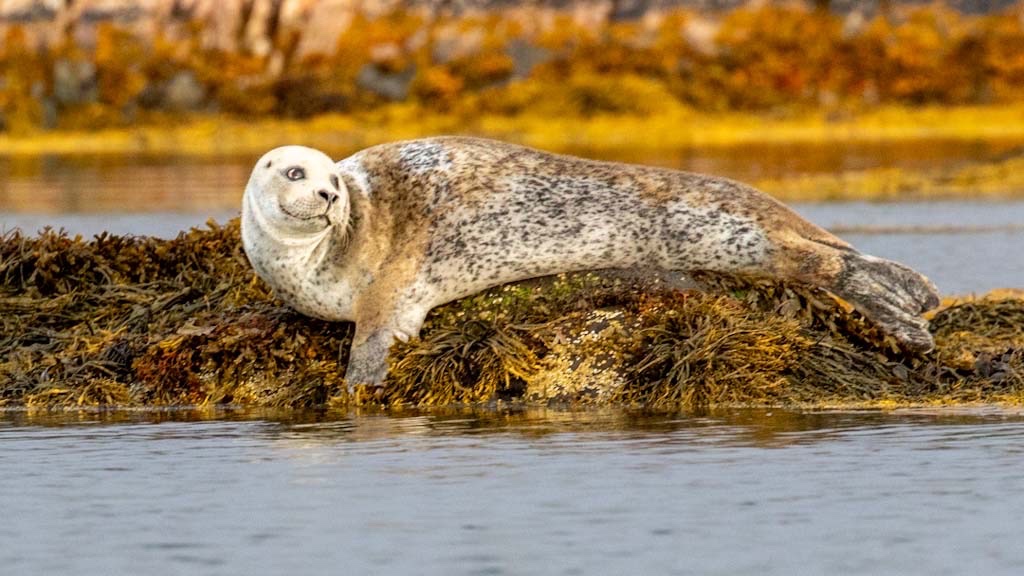
Entering the narrow anchorage at Plod Sgeiran, on the North side of the Ardmore Islands group, there were hundreds of seals resting on the low tide rocks showing on either side, including many pups in white fur, and many and various seabirds; one particular bird standing atop a rocky islet had a different shape to it, and on retrieving the 400mm lens for the DSLR, and cropping in, it was evidently an Eagle! It stayed on the rock for some minutes before flying off, approximately past us. My DSLR has a very clever autofocus system capable of tracking birds in flight – but of course, it was set in a different mode and I was lucky to get one sharp image.
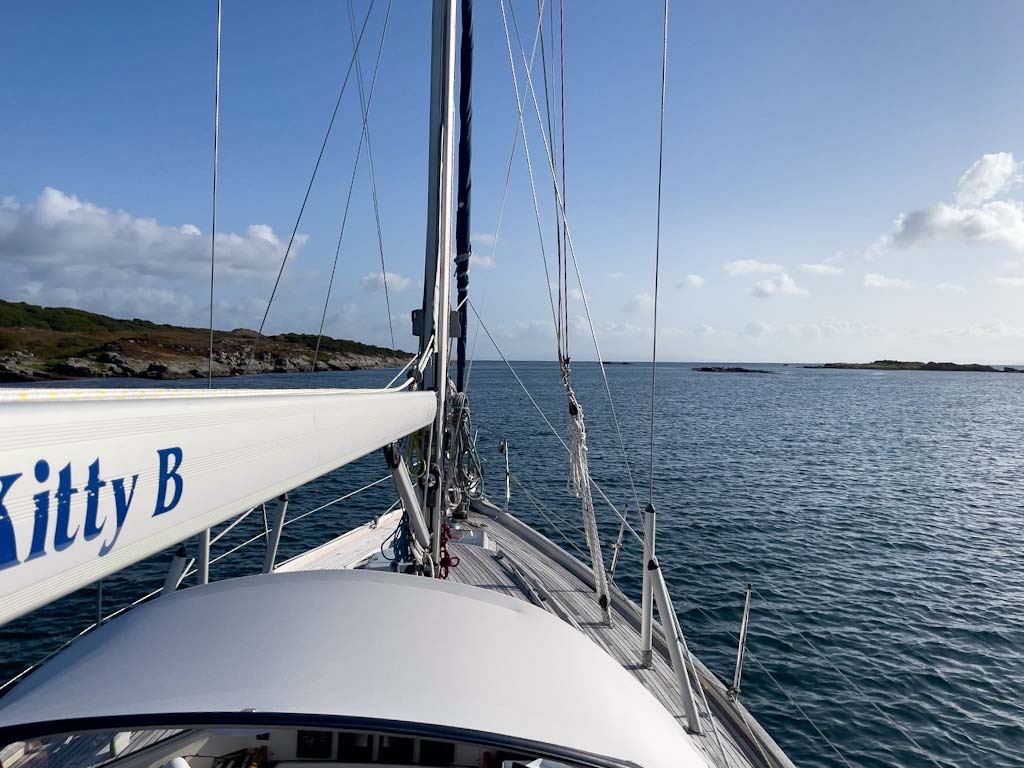
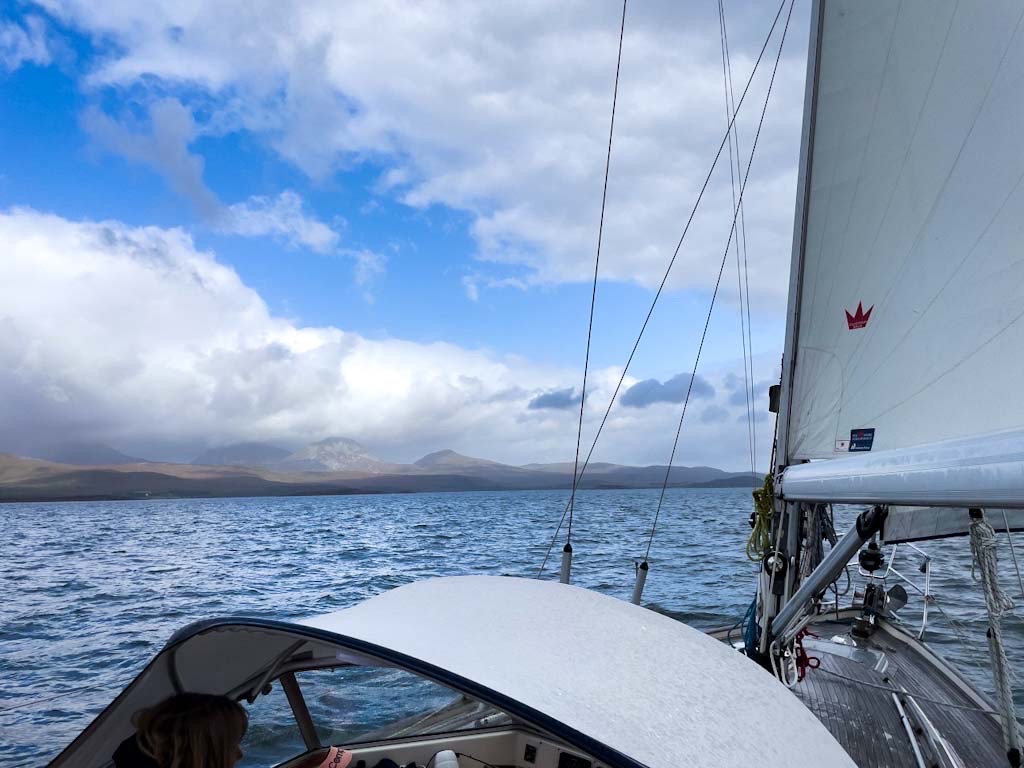
Next day, we extracted ourselves from the Ardmore Islands via the narrowish North Channel, in the lee of Islay, before setting sail for a great sail on a beam reach northwards, in intermittent blue skies and very heavy showers with associated squalls; approaching the South end of Luing, the visibility reduced in a heavy rain shower down to less than a mile, so the radar was exercised for a short while. Apart from the showers, it was great conditions for our yacht, sailing at over 7 knots for much of the time, even when a third of the main was rolled away.
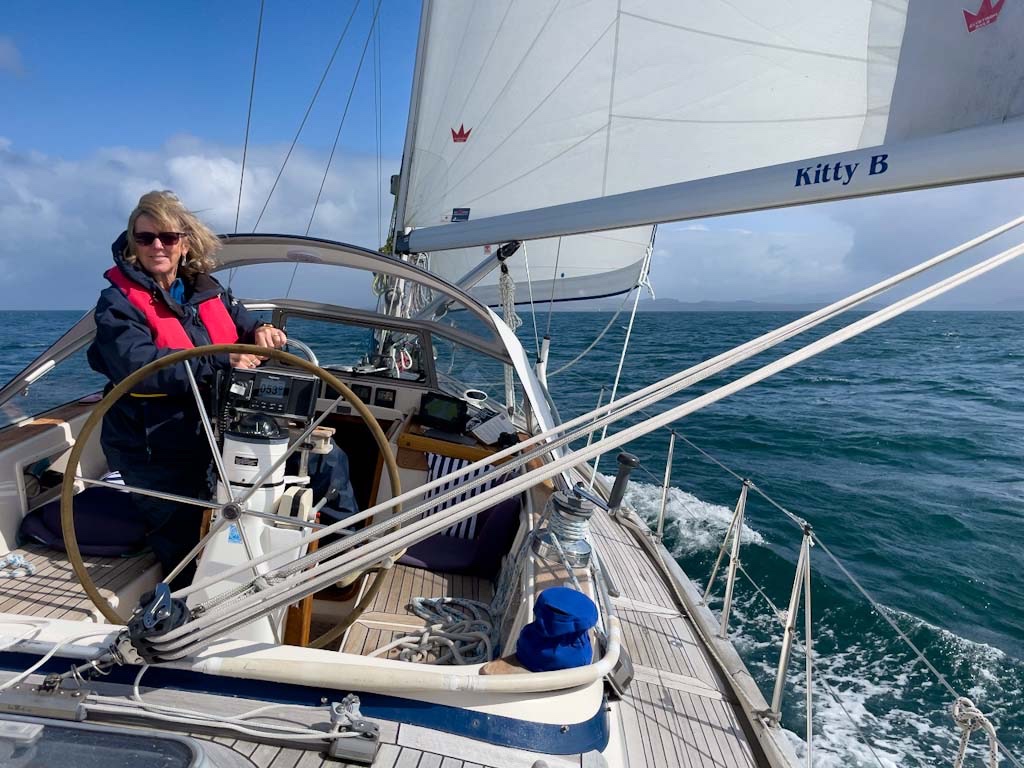
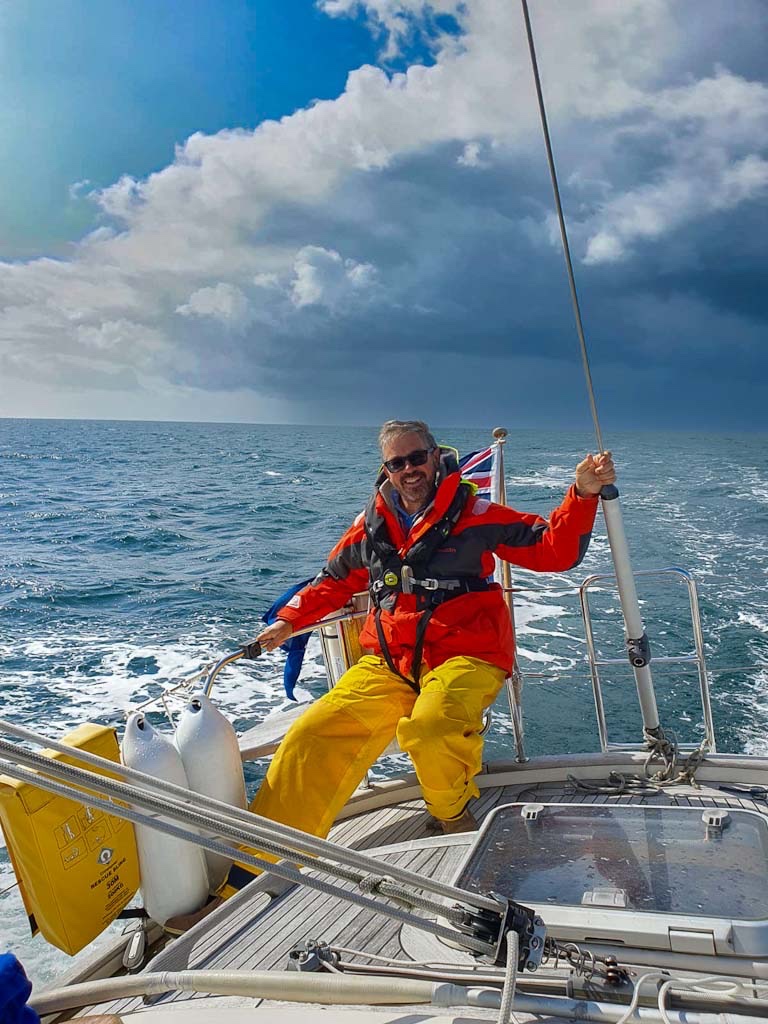
We anchored in Kilchattan Bay, off the village of Toberonochy, and found good holding there; on going ashore, we found that the village was quite charming, as were the residents that we spoke with; we enjoyed a lovely walk past the ruins of the old Kirk, on the top ridge of Luing, with views down to the west coast and over to the Gulf of Corryvreckan.
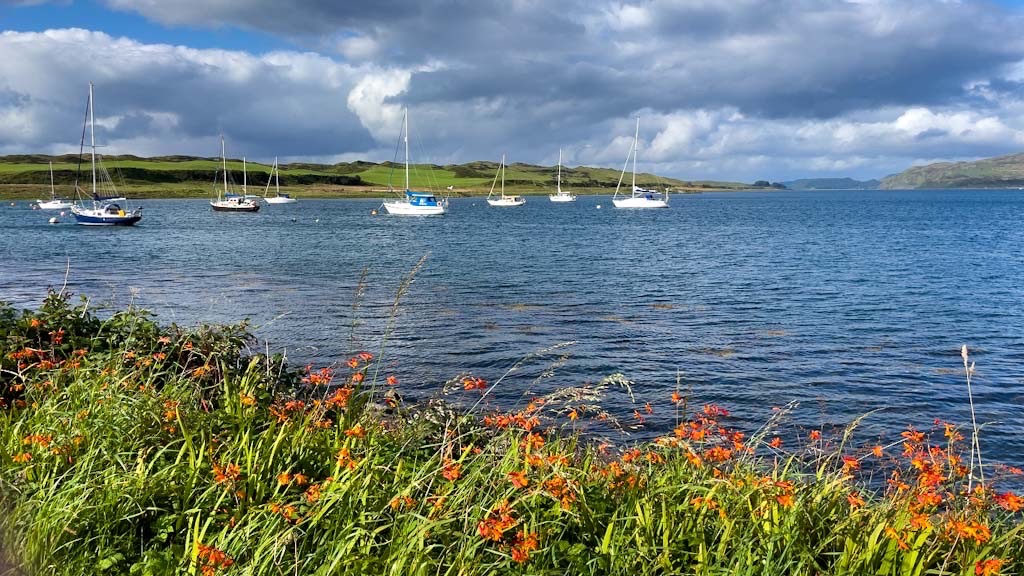
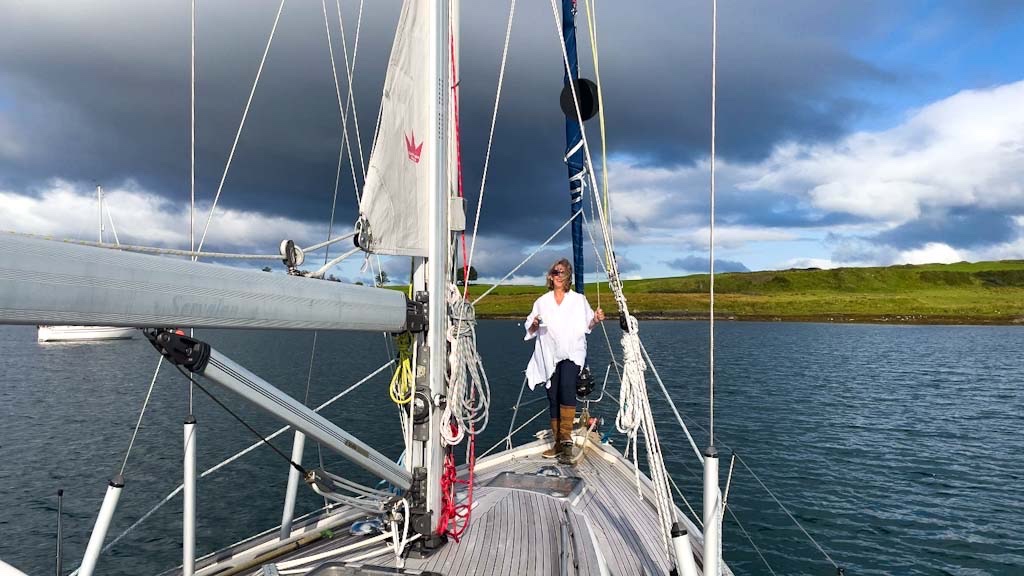
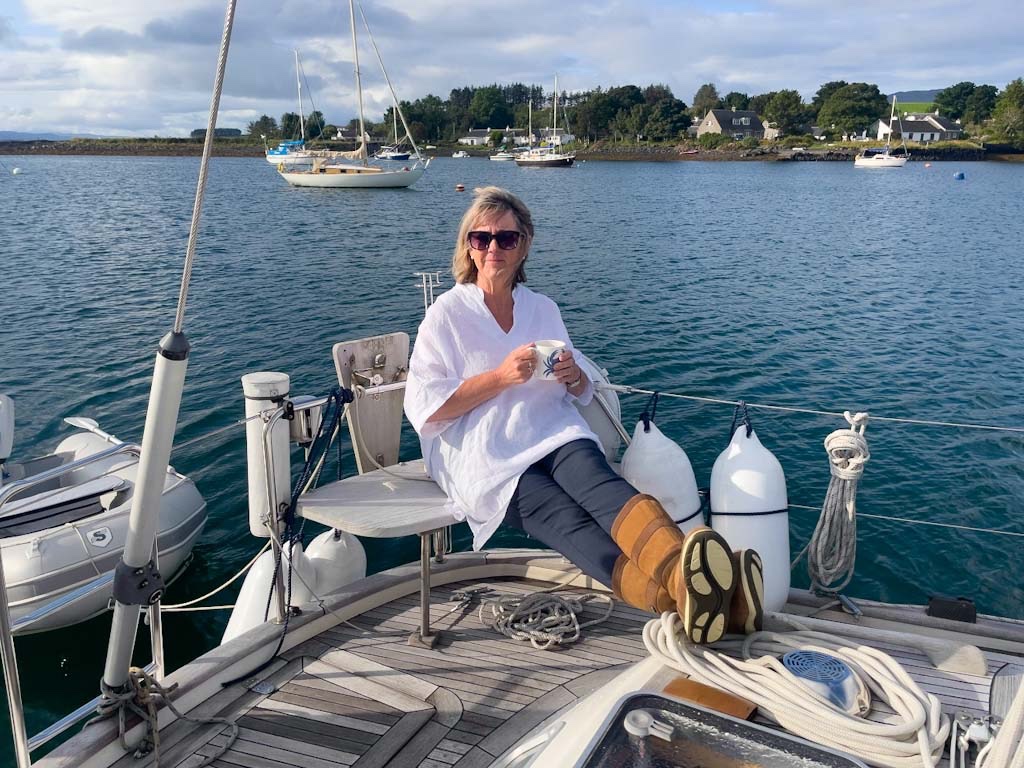
The next morning dawned sunny and almost calm; we wanted to explore into Loch Melfort, which we had not visited previously, and with only about 5 miles to sail, enjoyed a slow drift with the available wind, almost right into the North West corner where we were able to pick up an available visitor’s mooring off the ‘Loch Melfort Pier & Harbour‘ quay; they have a dinghy dock inside a wee harbour, which at low water, has just insufficient clear depth for our short shaft outboard on our inflatable dinghy!
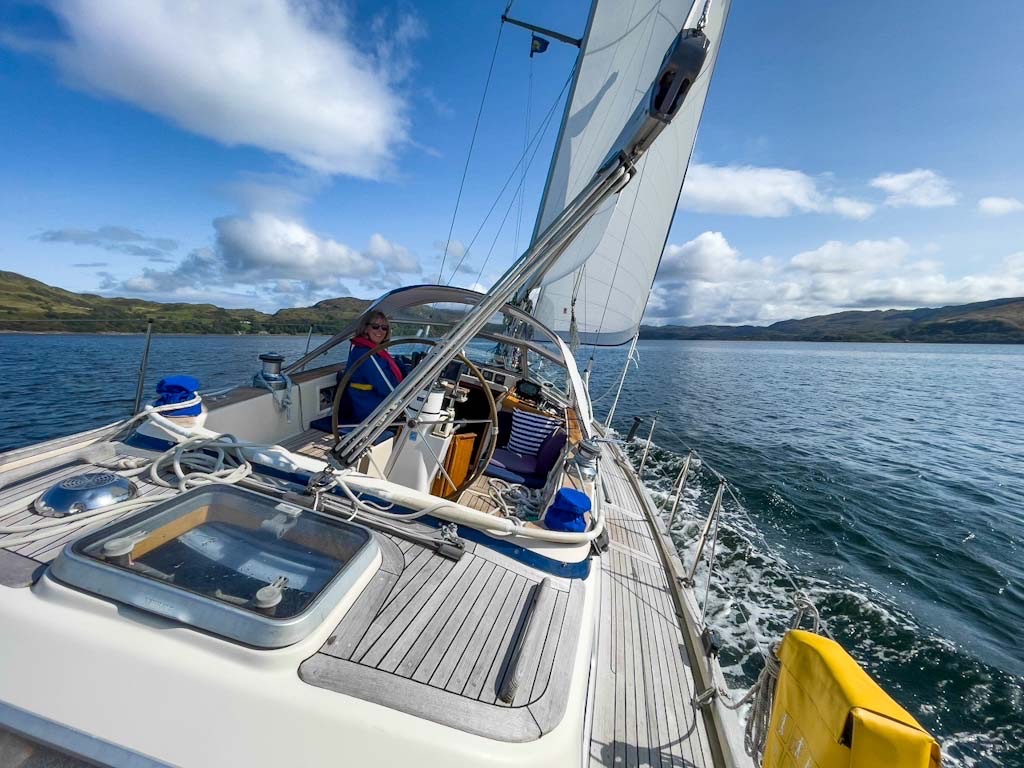
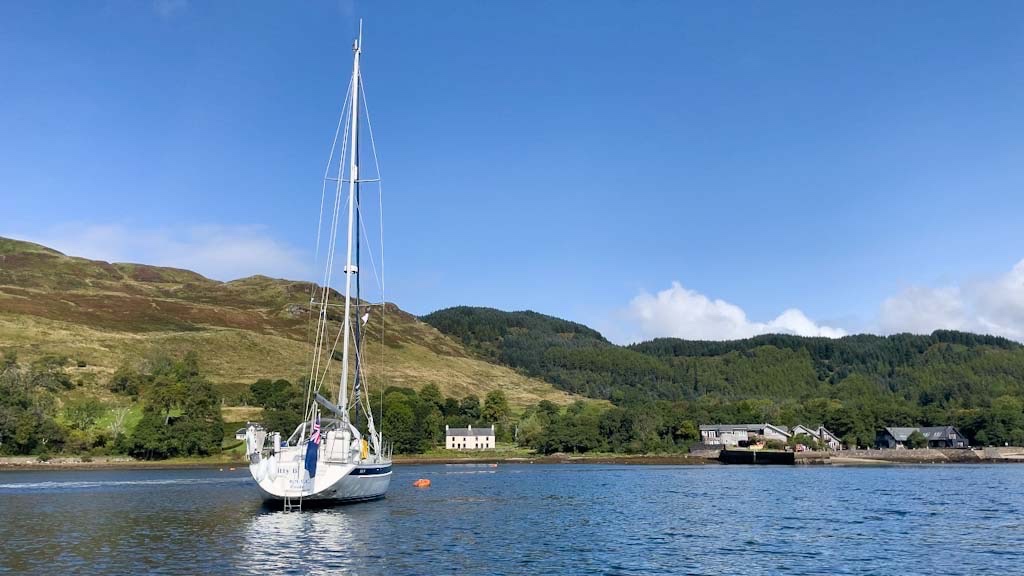
We had hoped to have lunch ashore here somewhere; however the café associated with the Melfort Pier & Harbour had recently closed their business, so we walked the 1.5 miles or so to Kilmelford village, hoping to secure a lunch from the hotel/pub there; however, they were also not trading at lunchtime! We returned hungry to the pier, enjoyed a shower ashore, and on returning to the boat decided to move onwards to the Loch Melfort Hotel itself – which confusingly, is just around the corner and not actually in Loch Melfort! They had four visitor moorings, with only one occupied – and whilst exposed to the South, the light wind was Northerly and due to veer to the East overnight.
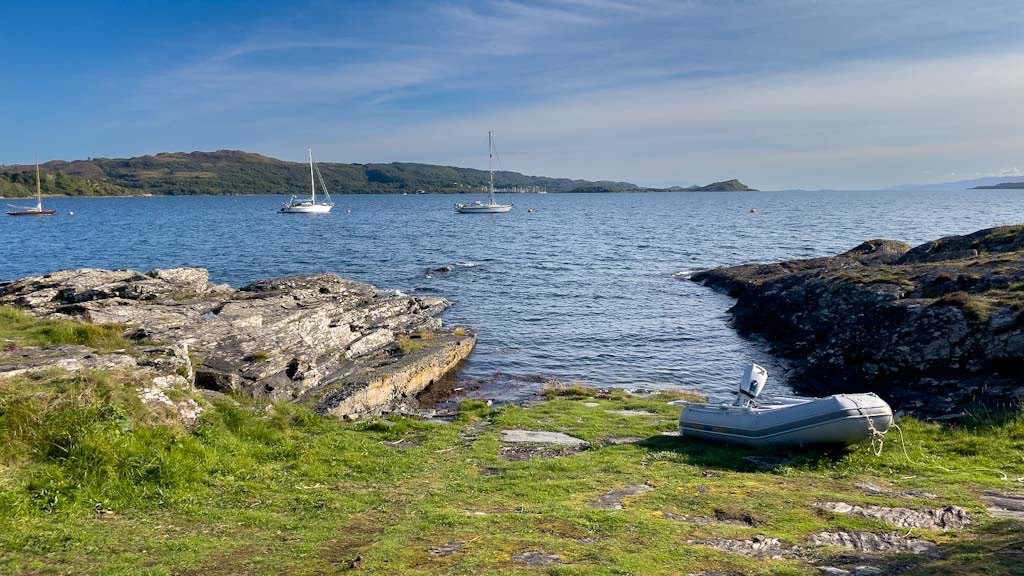
On dinghying ashore to the narrow slip between the rocks below their boathouse, we pulled the dinghy up above the high water line, and walked up the path to the hotel, where their guests were enjoying drinks on their patio deck with clear views to the South, past Craob Marina, and into the Sound of Jura; Islay was visible in the distance.
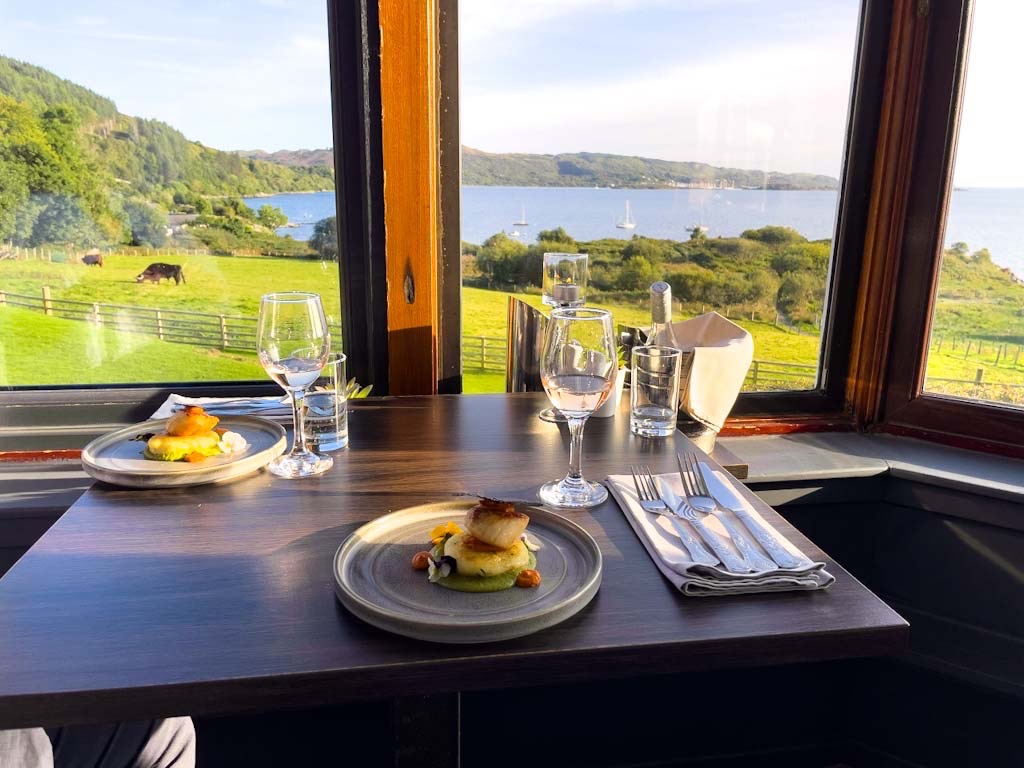
We enjoyed a particularly good meal in their dining room, with a view of our yacht on the mooring below, and found it to be very good value. We will aim to return, as and when the opportunity arises.
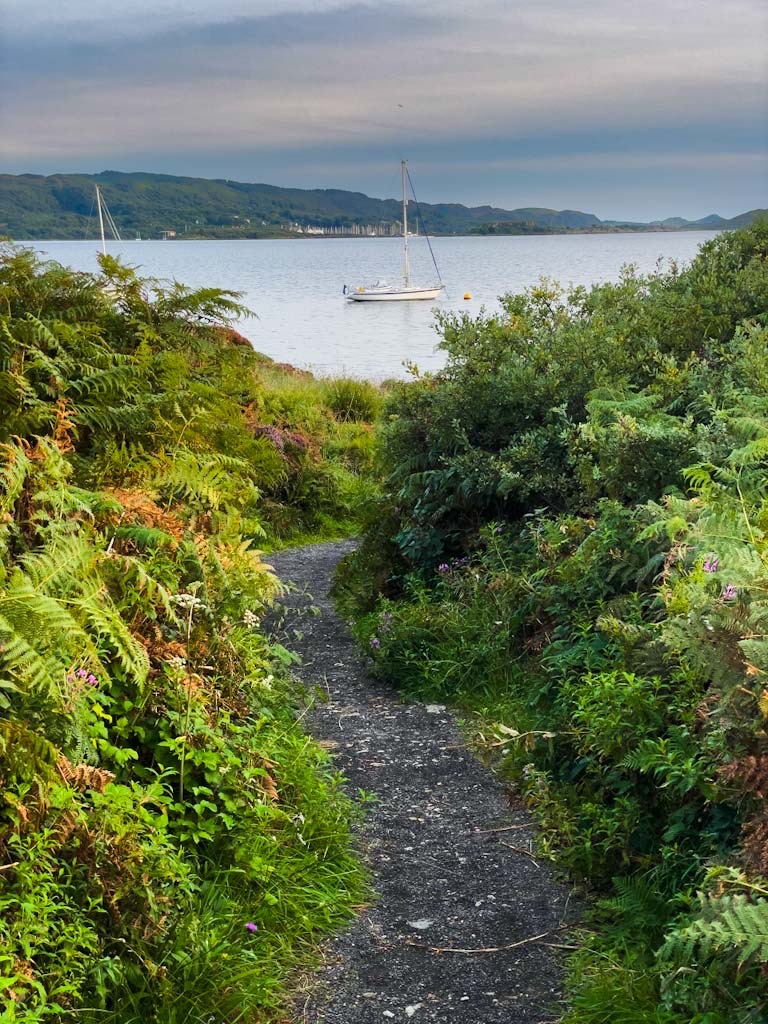
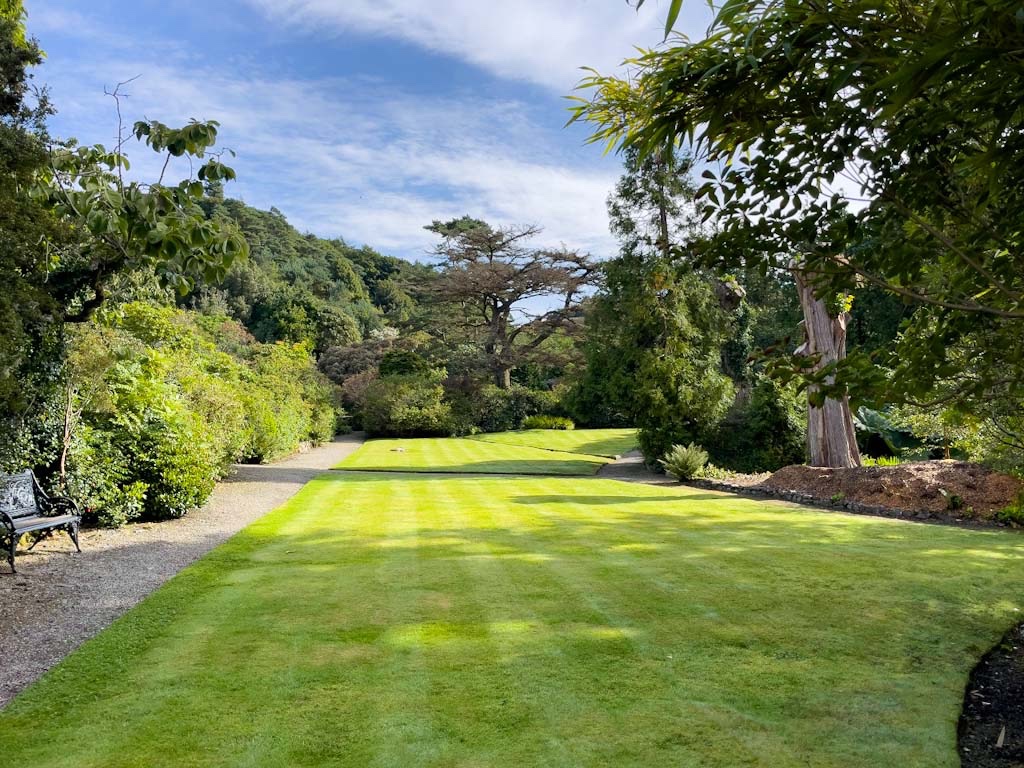
In the morning, we landed again at the same slip, though it was more challenging as it approached low water, and enjoyed a wander around the National Trust for Scotland gardens of Arduaine, next to the hotel – an excellent visit, and well worth revisiting at different seasons.
We both needed to do a couple of hours of work, so moved on to Craob marina for shore power for our laptops, and to enjoy showers and a lunch at the Lord of the Isles pub; before then sailing south, with the change in the tide, through the Dorus Mor to Loch Craignish, and a visitor’s mooring off Ardfern, where we bought more fenders to defend against the hazards of the Crinan canal locks.
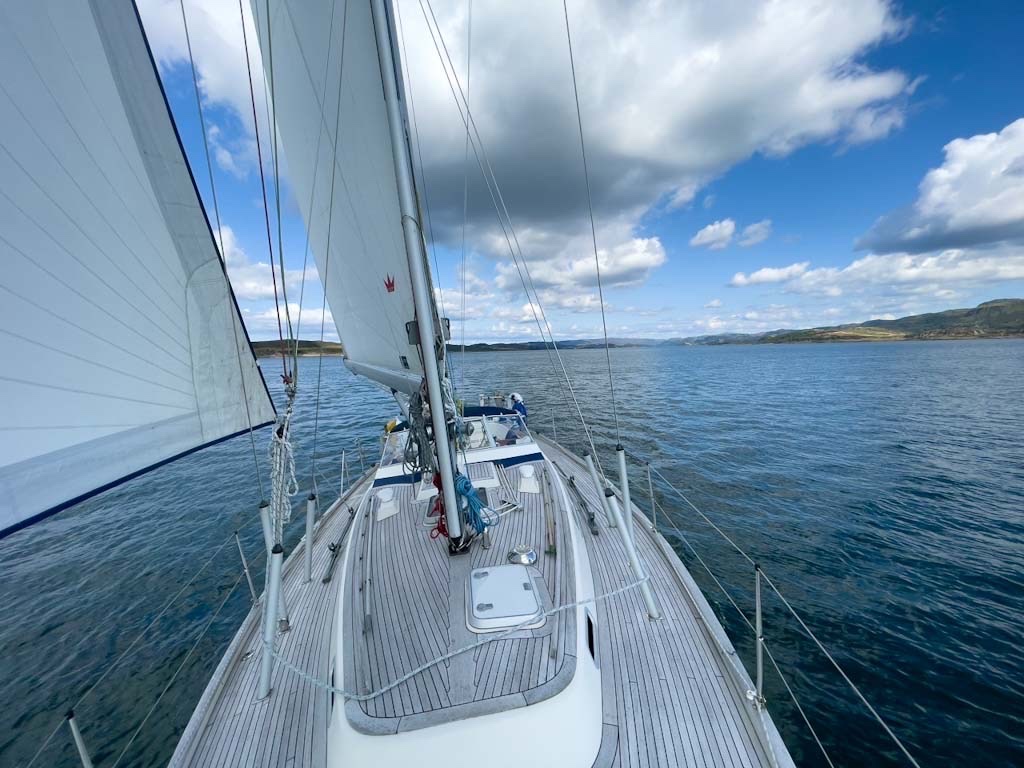
Friday’s passage was only the few miles to the sea lock entrance at Crinan, which we planned to enter at around 15:00, so after a walk, we had another delightful drifting sail in the very light east winds back along Lock Craignish, before being waved into the sea lock, Lock 15 of the canal, to join a vintage wooden sloop, and were followed in by another yacht and a large RIB, all heading for their off season homes around the Clyde.

The Crinan basin was empty of vessels, as one of the lock gates was leaking and due to be replaced in the coming winter, so all vessels were required to move straight through to the next lock also, and overnight along the canal.
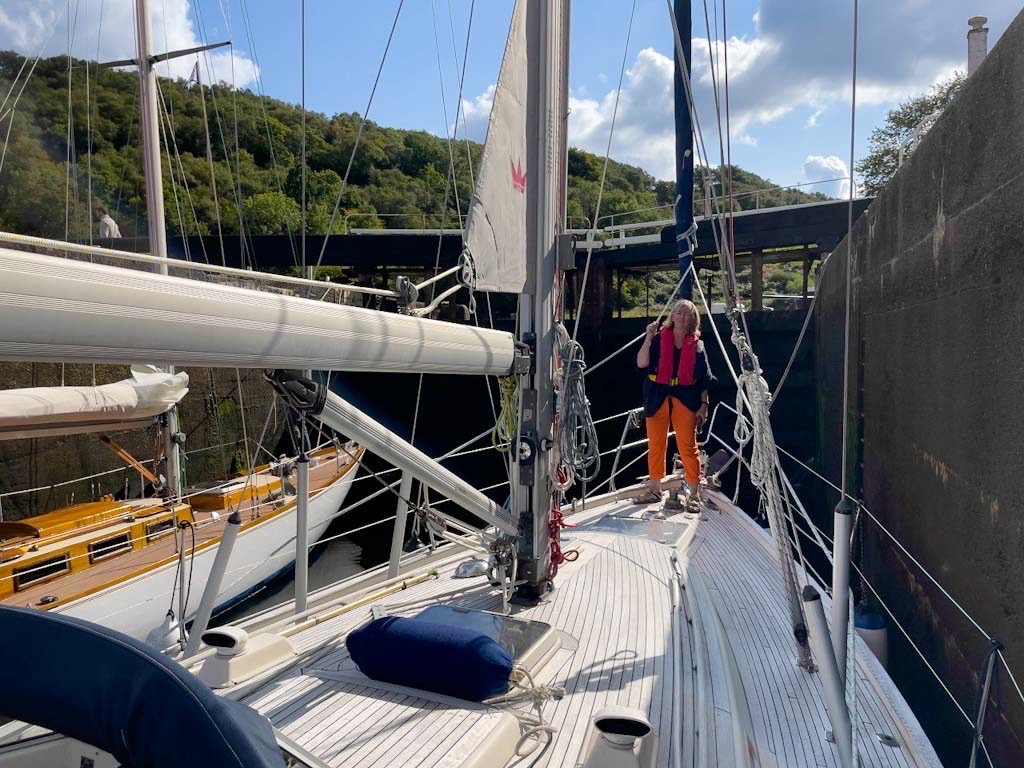
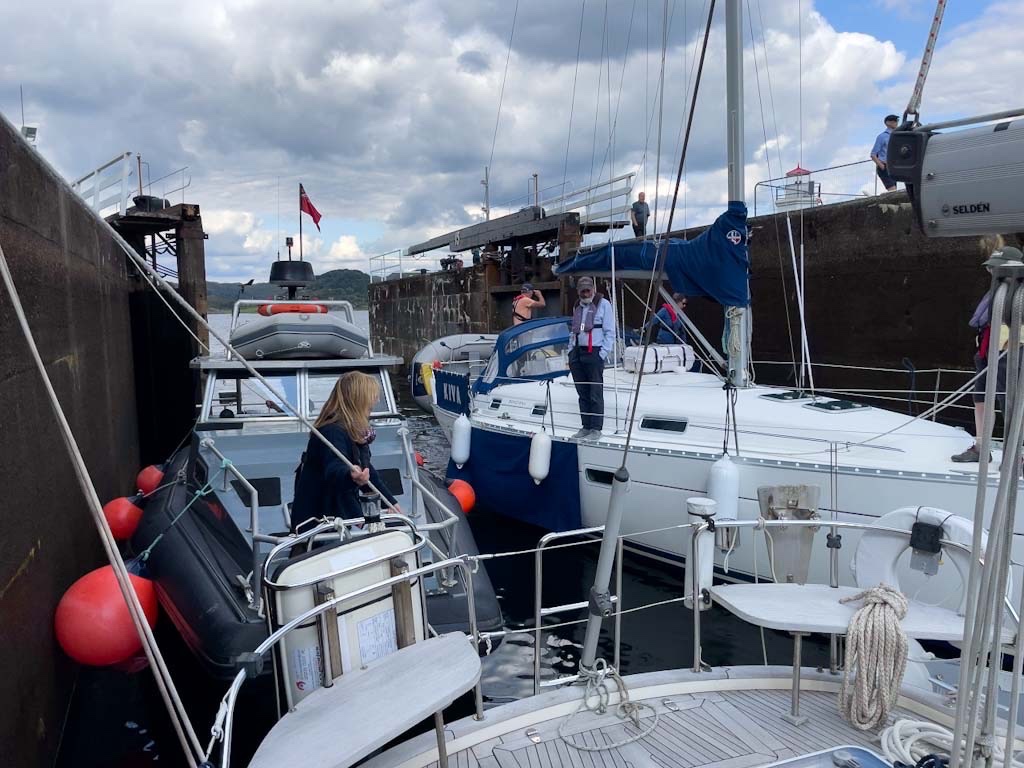
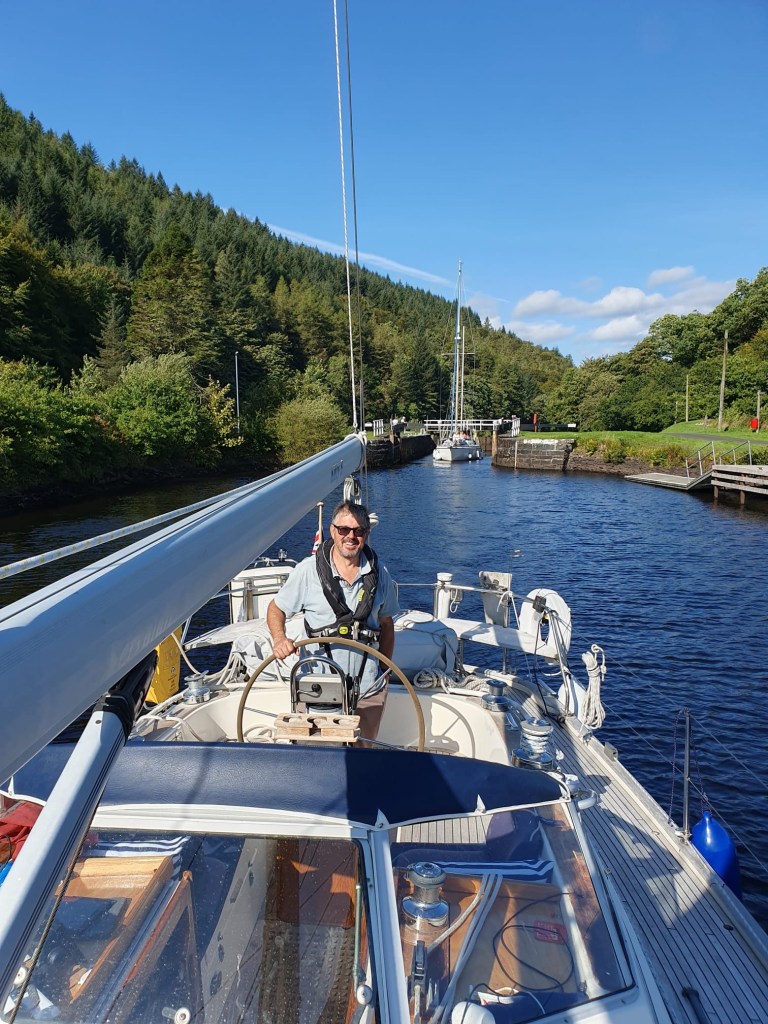
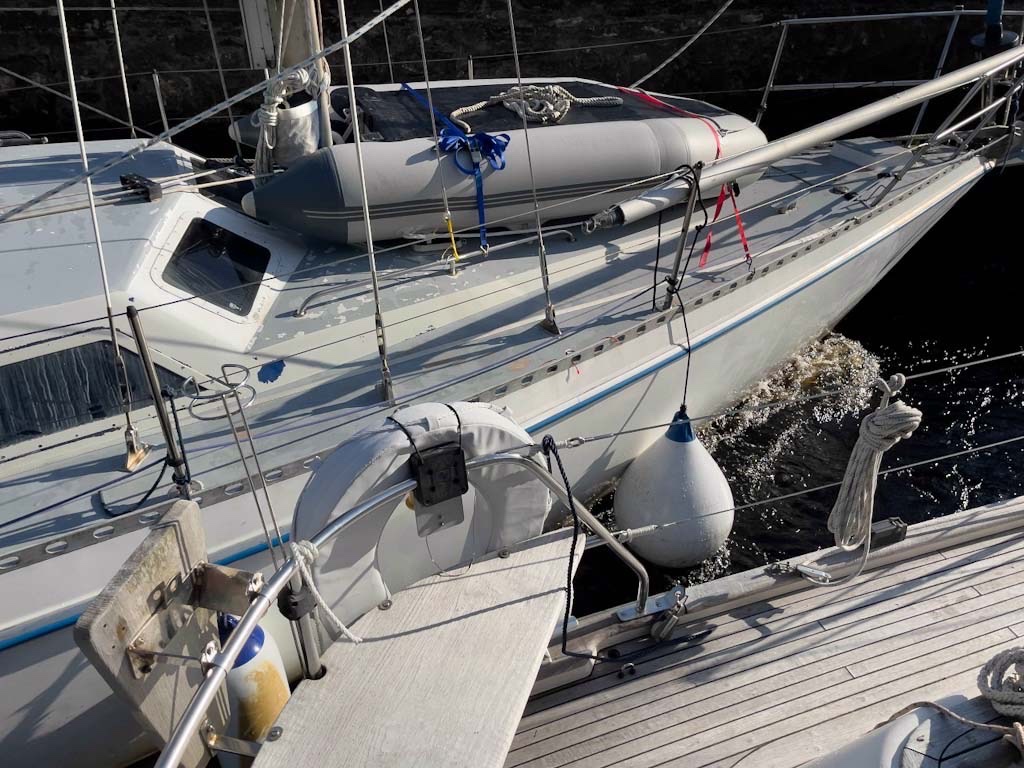
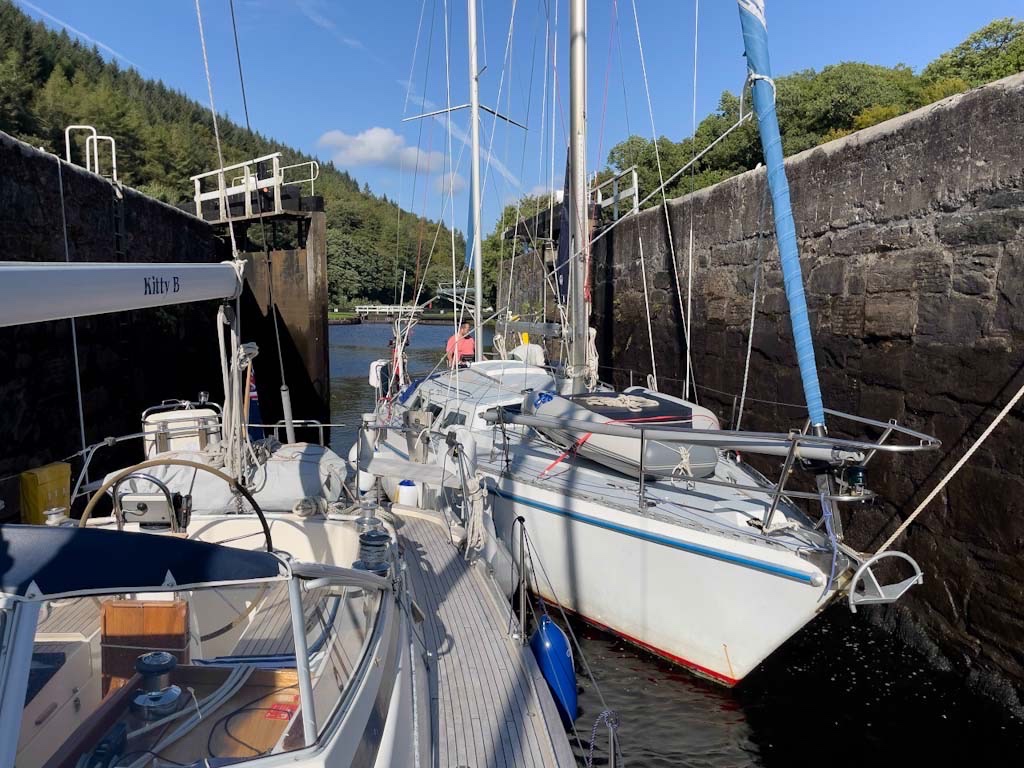
Going up in a canal lock is a little challenging in a fragile yacht; the incoming water from the sluices in the upstream lock gate cause significant turbulence, and can push the boat to one side or the other; with the shore lines leading almost vertically up to the bollards on the top of the lock walls, it is hard to control the position of the boat. The sides of the boat rub against the lock wall and the other boats in the lock with you are equally jostled around – hence needing lots of good fenders around the boat! You spend the time in the ascent shortening up the shorelines, whilst ensuring that the fenders are correctly positioned; and in one lock, pushing the boat out from the lock wall as the fender at the critical point had gone into the recess for the lock’s ladder, leaving the side of the boat undefended at that point!
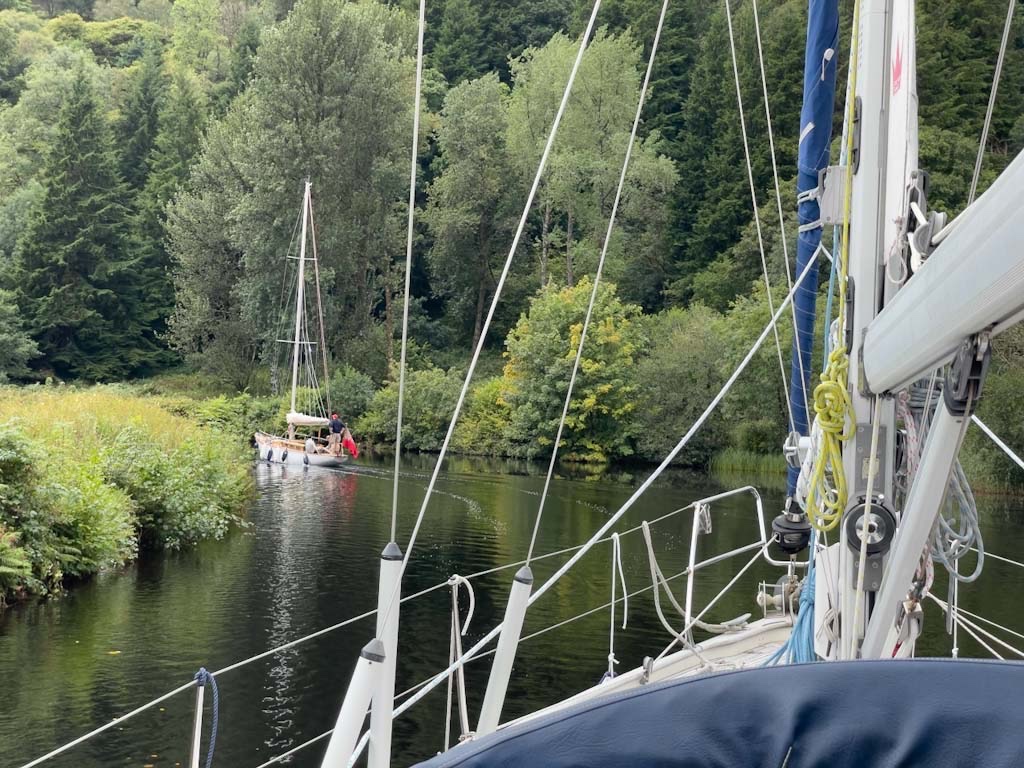
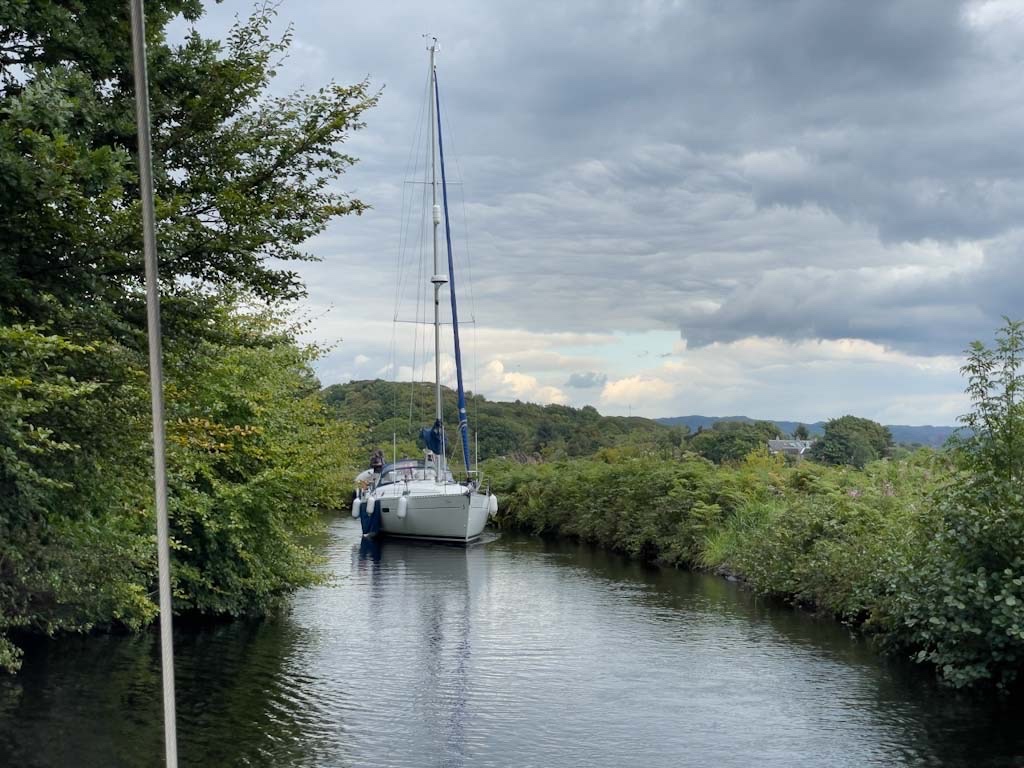
Once through Lock 14, we had a pleasant motor in convoy along a narrow section of the canal up towards Lock 13 where there are pontoon spaces for three yachts to wait; we rafted alongside another yacht already there, before walking along the canal to the Cairnbaan Hotel adjacent to Lock 5 for our dinner. This is less than 1.5 miles away, so along this small stretch of the canal, there are another 5 locks to go up, followed by 4 locks back down again.
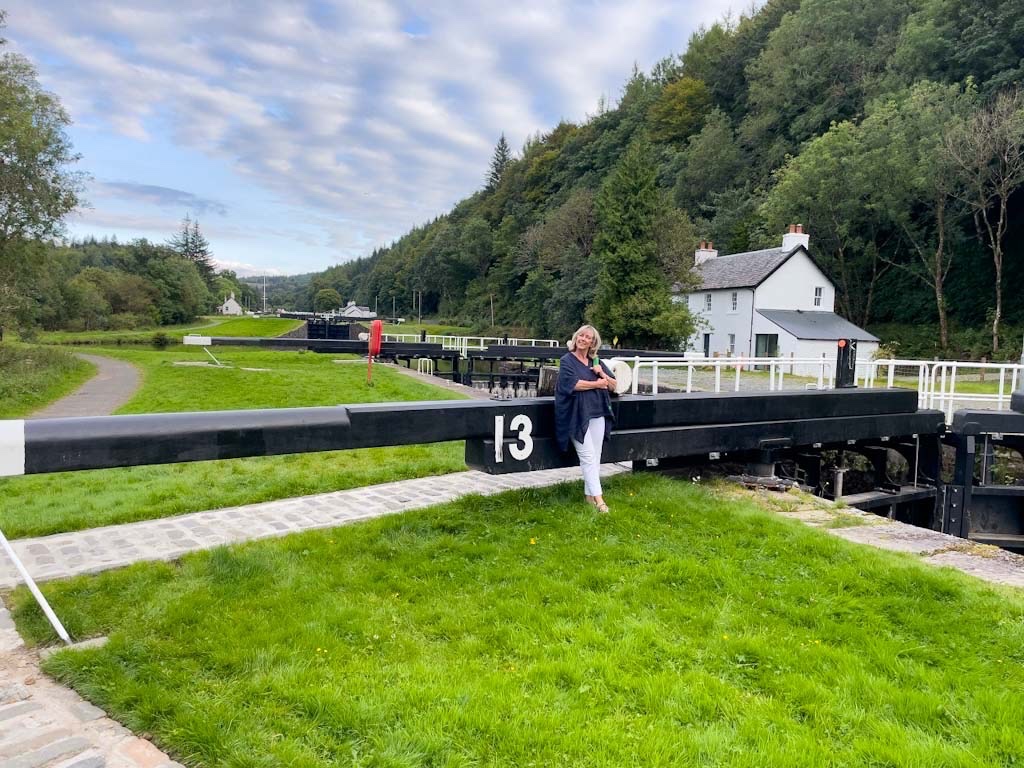
In the morning, we were joined by Peter, a freelance ‘pilot’ on the canal, to help us through the locks; Peter was with Darren, who had been hired by the yacht we had rafted alongside, and so Peter and Darren worked well as a team, opening the locks, taking our lines and operating the sluices, as both yachts progressed through the lock system; as the lock filled, one of them would move onwards to the next lock, and prepare that for our arrival, whilst the other would cast us off and close up the lock behind us as we left.
Arriving at Cairnbaan, Darren received a message that there was a problem with the opening road bridge at Lock 1, at the sea lock at Ardrishaig on Loch Fyne; we hoped that an engineer would be able to fix this during the afternoon, despite it being a Saturday. We pressed onwards to the final few locks at Ardrishaig; on passing through Lock 4, and going alongside the pontoon there, we learnt that it would be ‘Monday at the earliest’ before this particular problem would be attended to! At this point, a retreat back to the Crinan end would take to Sunday noon at best, and we would then have a passage of 100nm around the Mull of Kintyre, largely to windward. On balance, we decided to wait and hope that we might escape the canal during Monday; failing which, we would have to review our options including leaving the boat for a while, as we were committed to being elsewhere on Thursday at the latest.
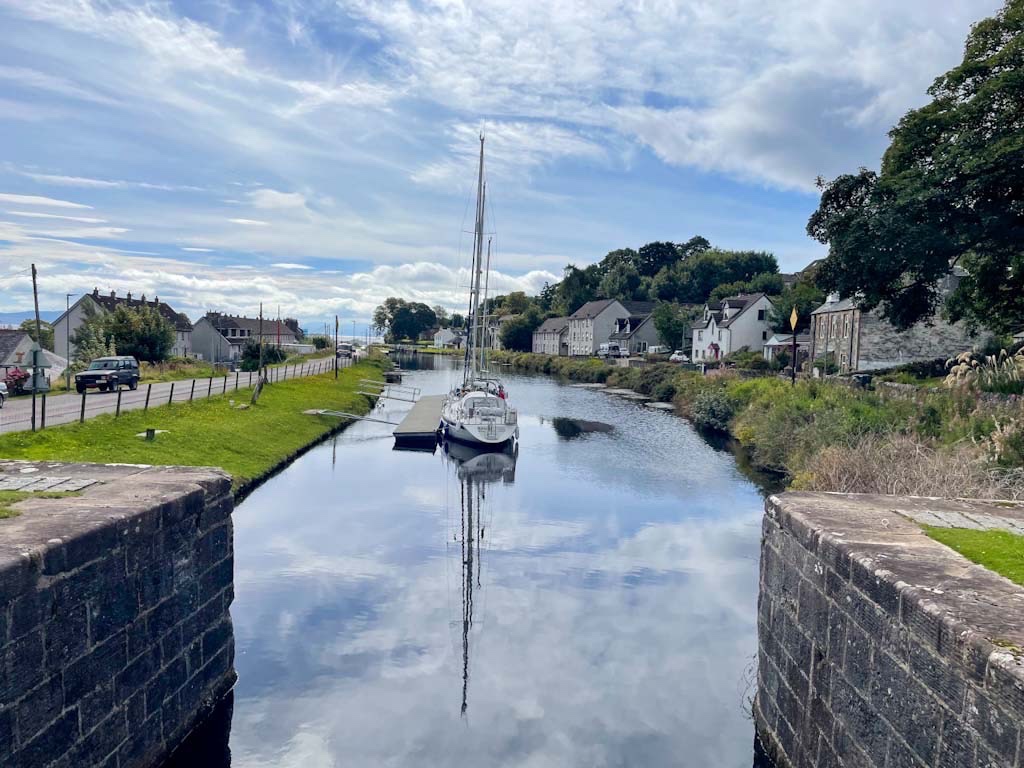
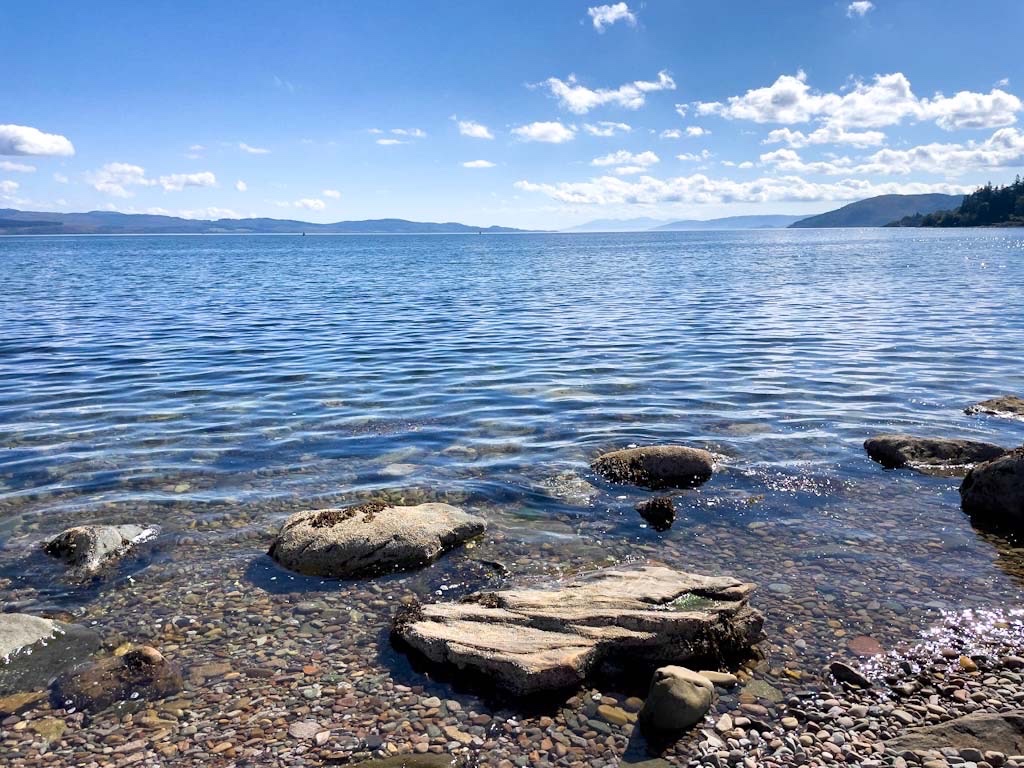
During Sunday, we walked back along the canal to look around the town of Lochgilphead, and made arrangements for the loan of a desk in the community hall to enable some work to be done on Monday – holidays are over, and its back to work, somehow! On checking in at the basin and faulty bridge on Monday, we could see that the engineers were busy working through the issues, and sure enough, they went for a ‘test opening’ soon after lunch; three yachts waiting in the basin were able to exit, and one waiting outside was able to come in; this freed up space for the two of us held below Lock 4 to descend to the basin, and in due course, the engineers had a further test swing, which enabled us to exit to the sea lock; finally, at 16:30, we were out of the canal and into Loch Fyne!
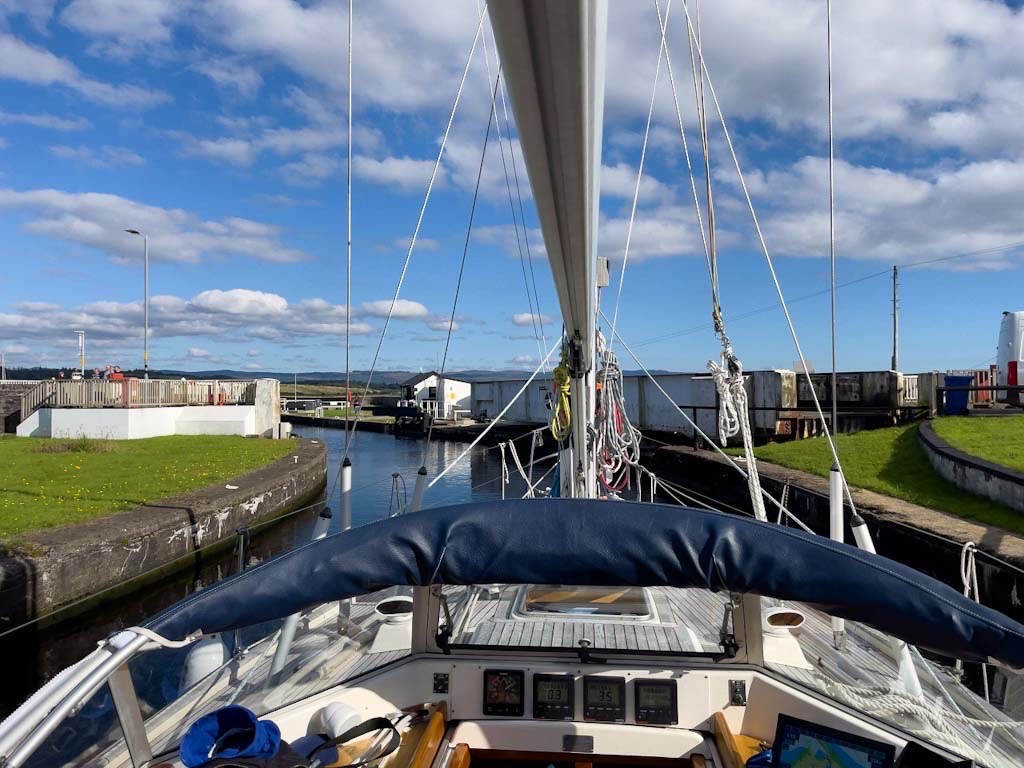
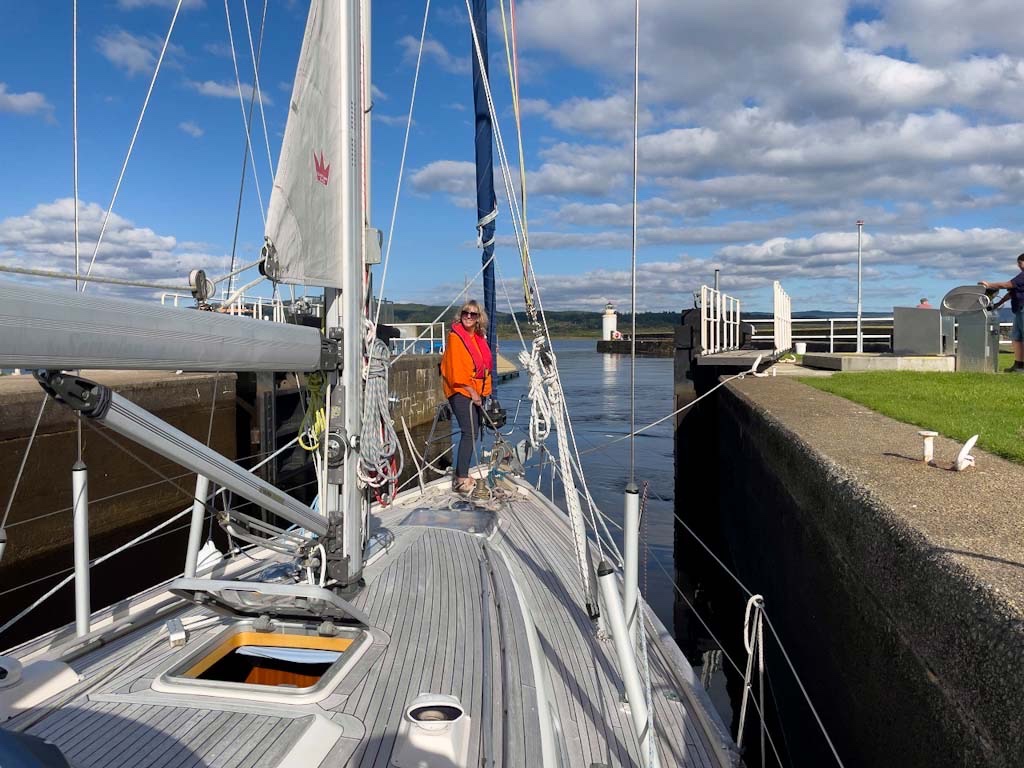
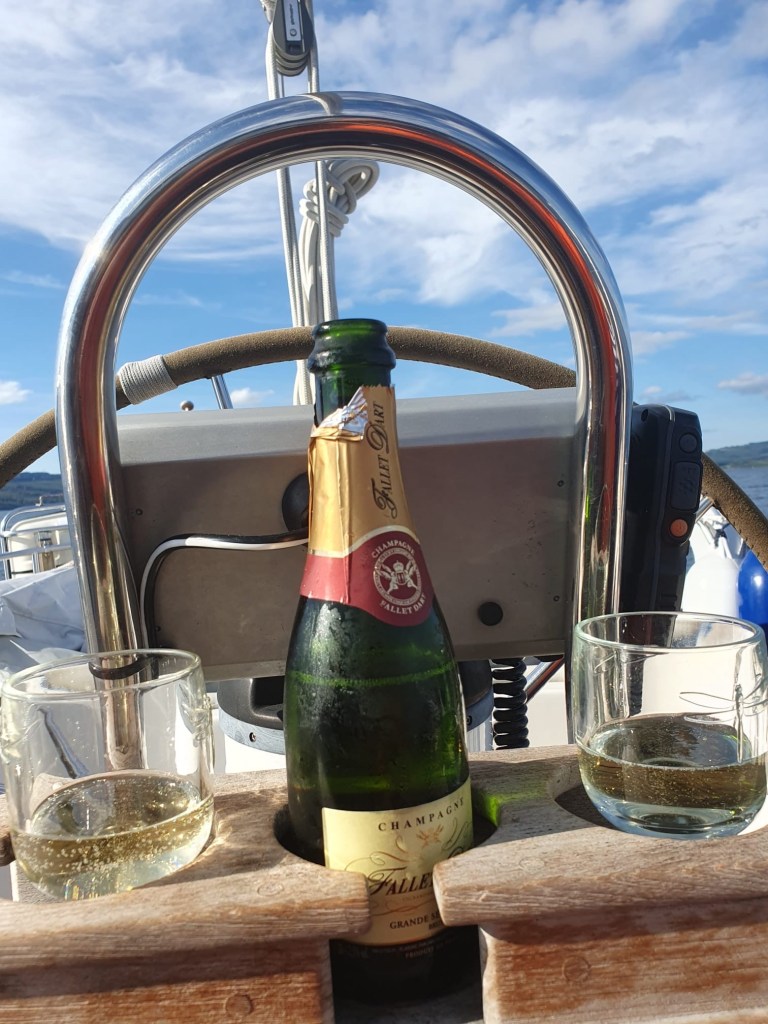
It was flat calm in the loch, with calm conditions forecast all night, so we took the opportunity to anchor in St Ninian’s Bay, on the SW coast of Bute, with shelter from the north and east in the bay, and shelter from the west from Inchinnan Island. It was a stunning evening at anchor, with the bay to ourselves, and a warm evening with a clear starry sky above.
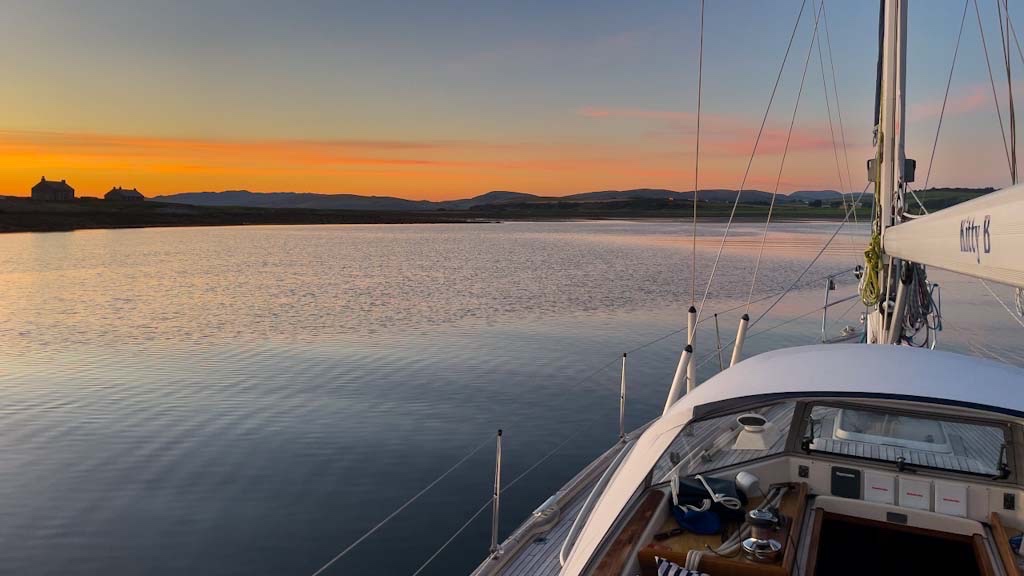
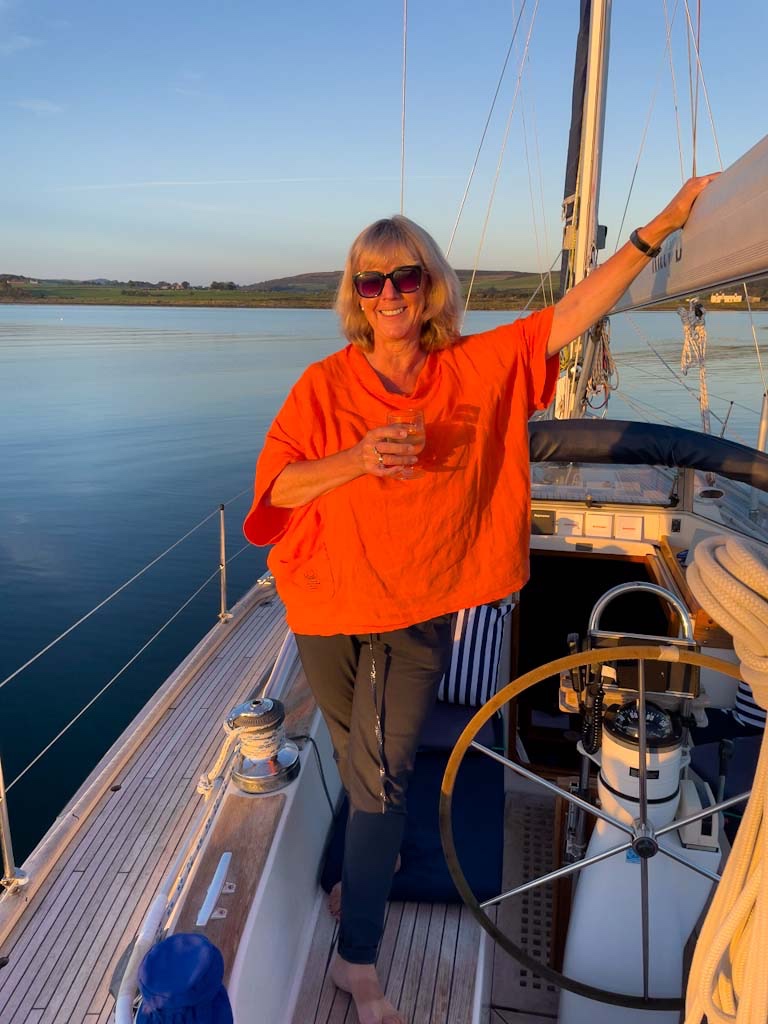
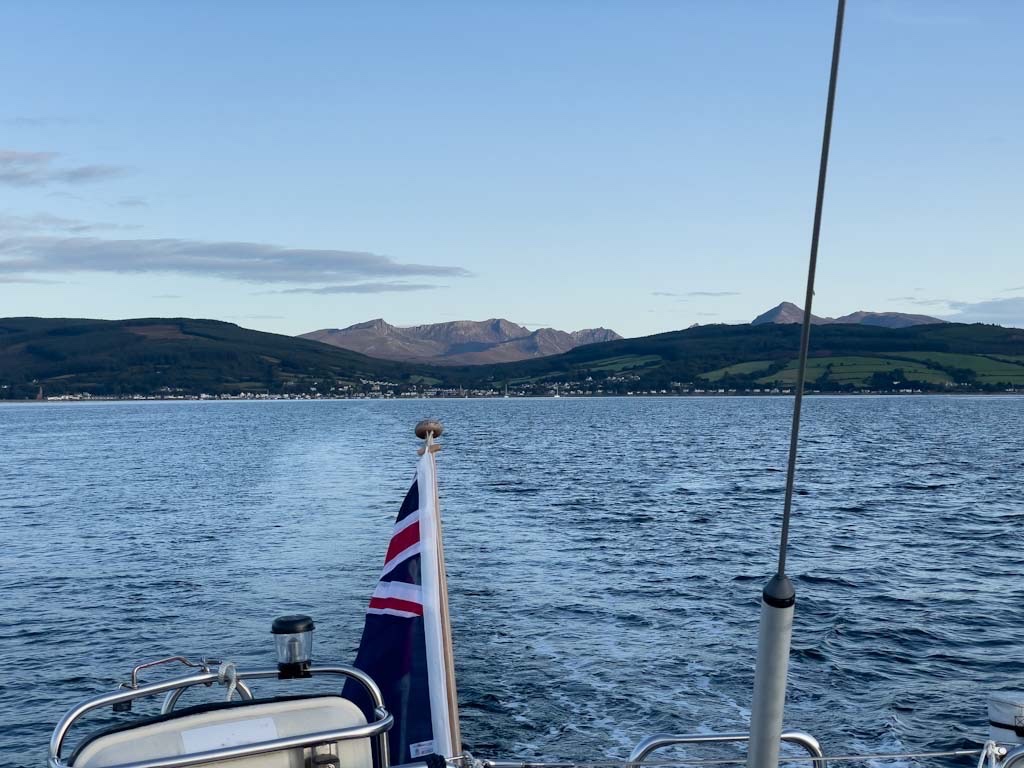
On Tuesday morning, we weighed anchor at 06:15 after admiring the first light rising on the scene around us, and on the high peaks of Arran to our south; we were alongside our berth at Largs Yacht Haven by 08:30 and soon ready for work, on the saloon table and the sailing clubhouse, respectively.
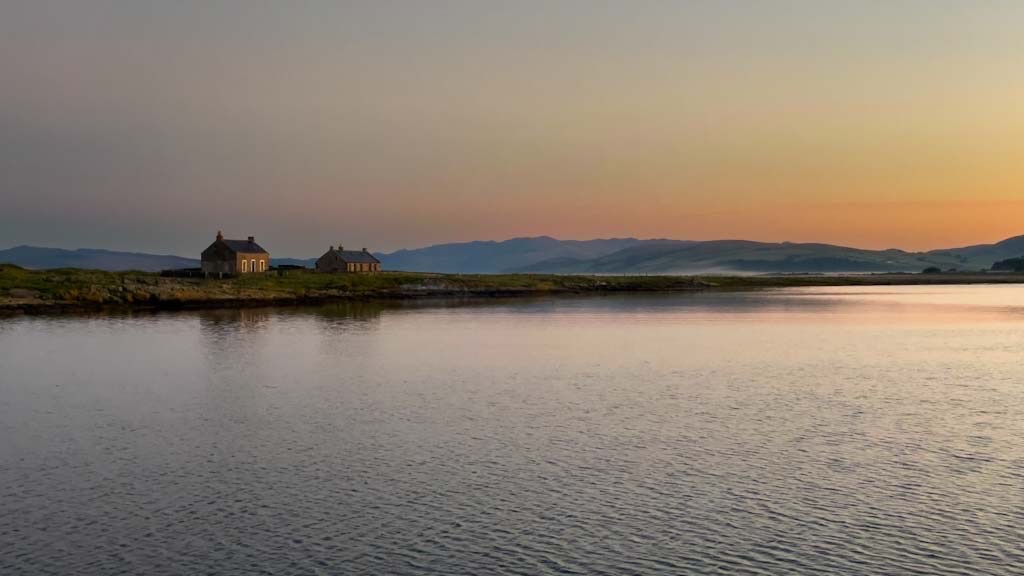
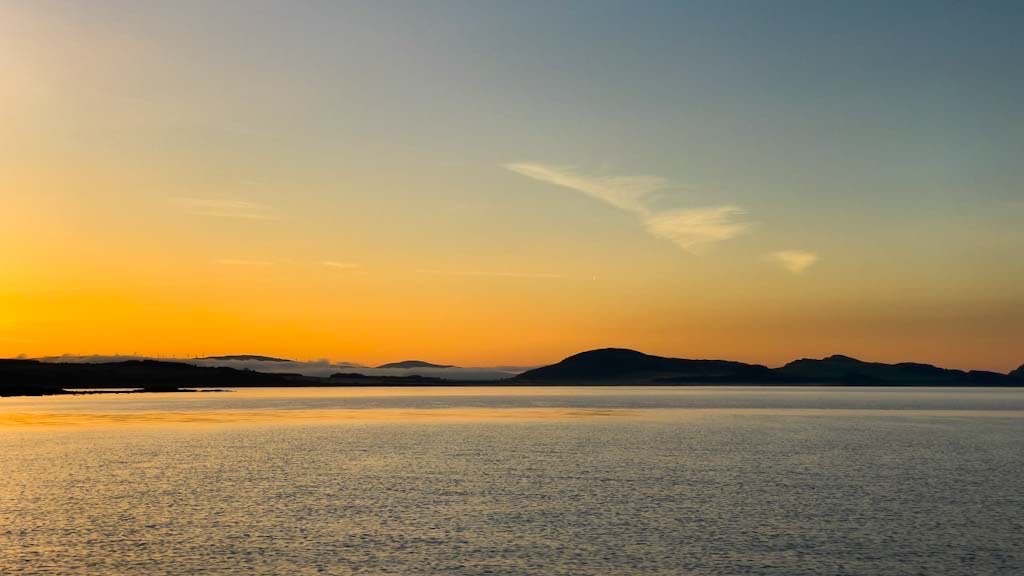
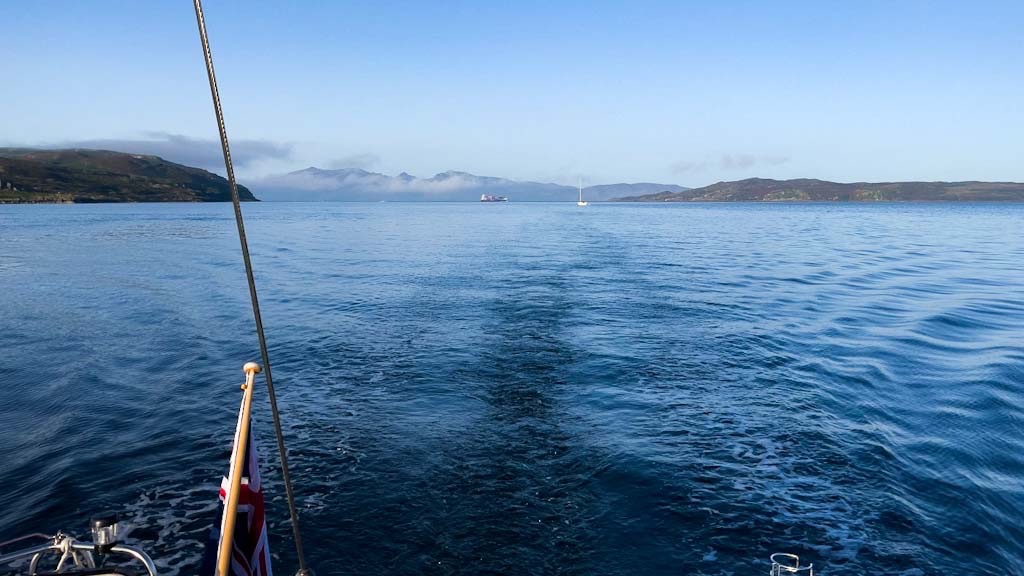
Our enforced slightly extended cruise of 11 nights covered a total track of 213nm, one day that had some heavy showers, and at least some sun every day; the engine clocked up 33 hours, including some to keep the batteries sufficiently charged, and around 8 hours for the canal transit. The weather on our 27 days over two Scottish west coast cruises this season more than made up for the lost weekends due to poor weather that was endured during the period between our cruises.
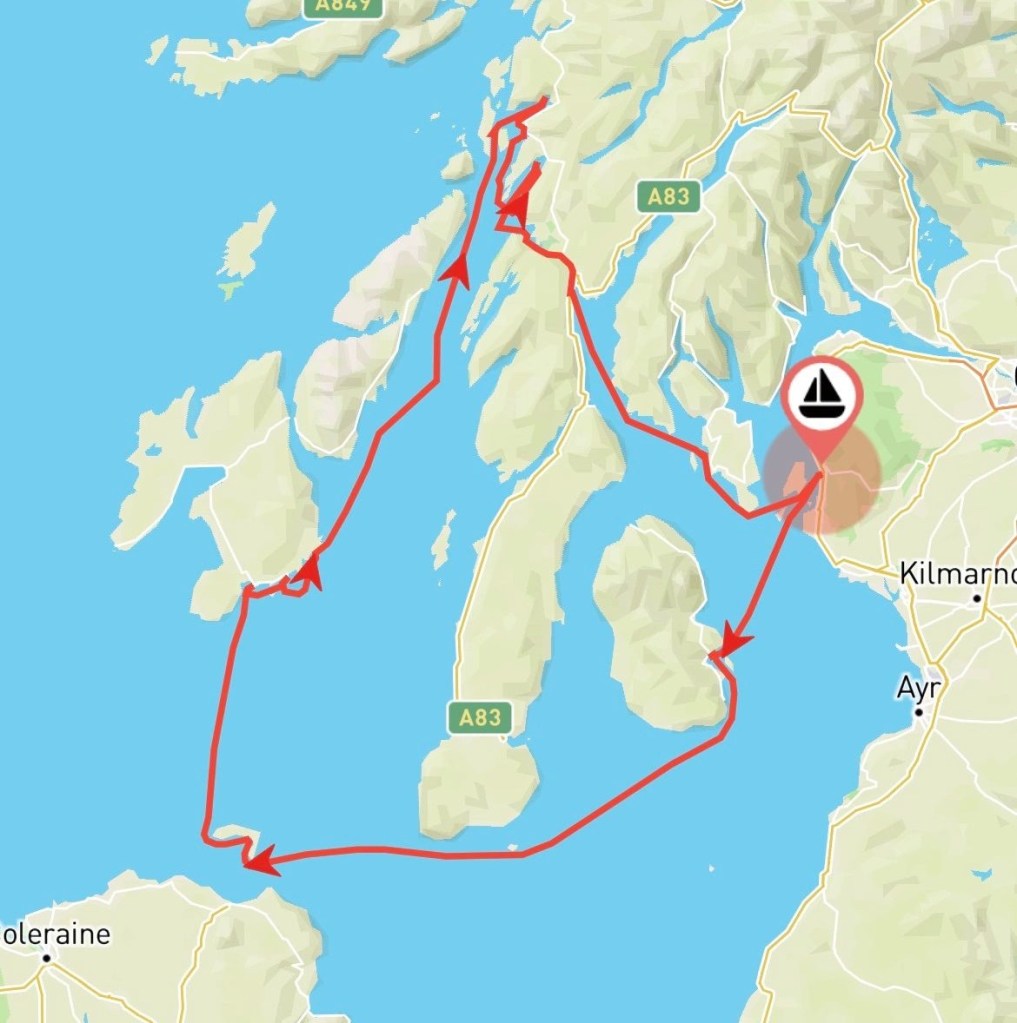
 Travels of Sailing Yacht Kitty B
Leave a comment